- calendar_today August 27, 2025
Texas Faces Major Job Shifts with AI Disruption by 2030
Texas Faces Major Job Shifts with AI Disruption by 2030
Artificial Intelligence (AI) is going quickly, and it’s coming directly to the workplace. As exciting as the innovations of AI are, they also mean significant changes for workers across the United States. In a big, diverse economy like Texas, the effect might be particularly dramatic.
Experts say that by 2030, almost half of all Texas jobs may be disrupted or replaced by AI. From large cities such as Dallas and Houston to smaller cities throughout the state, entire industries may experience a revolution not seen since the Industrial Revolution.
Let us look at how this revolution may play out, which industries will experience it most, and how Texans can gear up for the future of work.
Why Texas Is in the Middle of AI Job Disruption
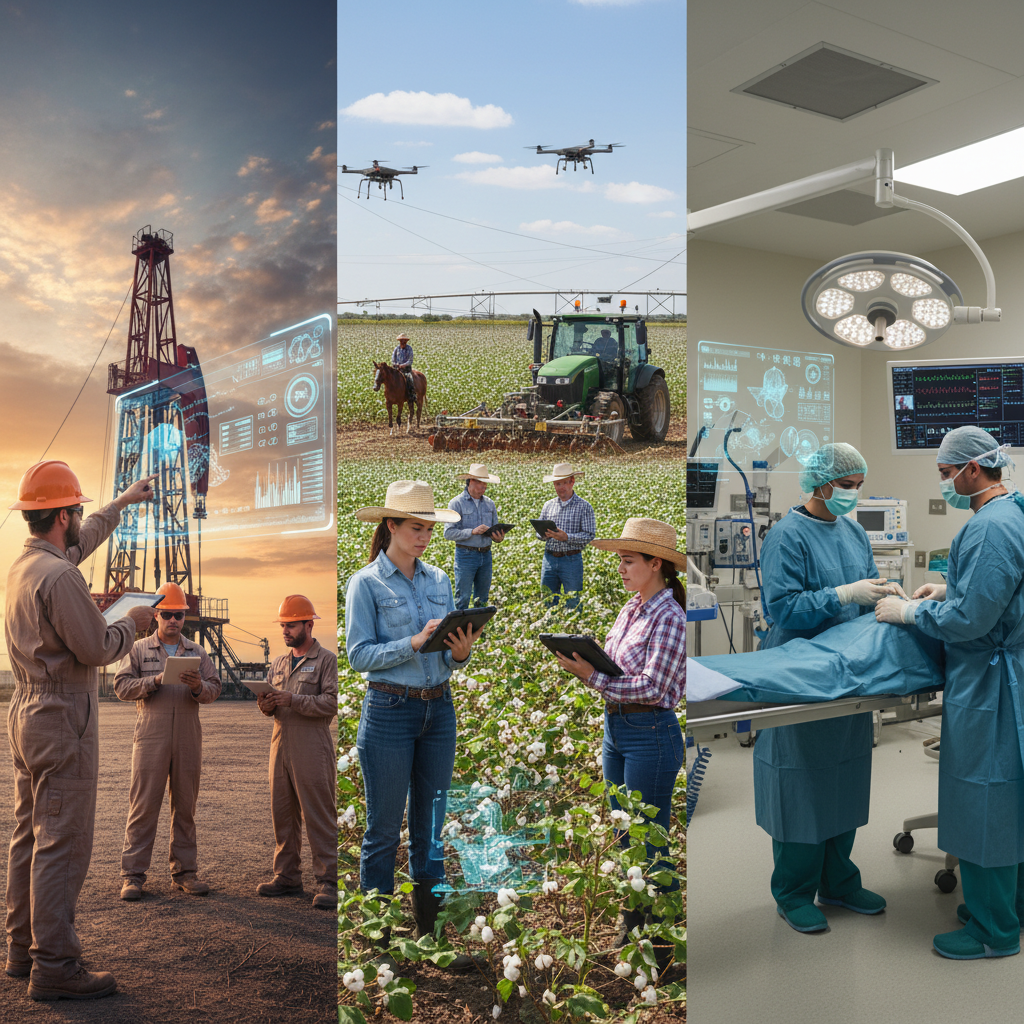
Texas possesses a robust economy that is founded upon a number of prominent industries: energy, oil and gas, transportation, agriculture, healthcare, and technology. As much as this diversity is a benefit, most of these industries rely upon repetitive, predictable, or physical tasks—precisely the kind of labor that AI and automation can automate or replace.
Concurrently, Texas is also emerging as a technology hub, with Plano and Austin drawing startups and AI companies. So though numerous jobs are disrupted, Texas also stands a good opportunity to take the lead in shaping the next employment generation.
Which Texas Industries will be most impacted?
1. Oil and Gas
Texas produces the most oil and natural gas in the country. Most jobs in the industry are watching equipment, hauling supplies, and running machinery—functions that can be done more and more by AI and robots.
- AI software can forecast the failure of equipment, enhance safety, and utilize resources in ways they never could before.
- This could decrease the demand for some field workers but heighten the demand for engineers and automation experts familiar with technology.
2. Transportation and Trucking
Texas is a large trucking and logistics center because of its location and size. But AI is transforming this environment already:
- Driverless trucks are testing Texas roads.
- Intelligent logistics platforms can optimize routes, fuel consumption, and driver scheduling.
- This may reduce jobs for conventional truck drivers and dispatchers, but increase the need for fleet managers, maintenance technicians, and AI system managers.
3. Agriculture
Texas farms are employing drones, sensors, and artificial intelligence software to scan soil, monitor livestock, and control irrigation.
- Manual labor could decline.
- But there will be increasing demand for agri-tech operators, data analysts, and mechanics proficient in intelligent farming equipment.
4. Retail and Customer Service
In towns and cities, AI is appearing in shops, banks, and online services:
- Self-service checkouts, chatbots, and voice assistants are taking over some cashier and support positions.
- But sales, training, and customer-facing roles will still require human touch.
5. Healthcare
The healthcare industry in Texas is booming. AI is assisting with diagnosis, patient data, and even performing surgeries.
- Administrative jobs might be cut back.
- But hiring for nurses, care workers, technicians, and health IT professionals will continue to increase.
Jobs Most Likely to Increase in Texas
AI will not just displace jobs—it will also generate new ones. Texans who prepare and reskill today can leverage these emerging fields:
AI engineers and software developers
Cybersecurity experts
Data analysts
Renewable energy technicians
Healthcare support workers
Trained trades (HVAC, electricians, technicians) with technology integration
Digital marketing and e-commerce positions
Texas can be at the forefront of creating tomorrow’s jobs if it invests in workforce development and training.
How Texans Can Prepare
Change is on its way, but it’s not too late yet. Here’s how employees all over Texas can remain prepared:
1. Acquire Digital and Tech Competencies
From coding to leveraging smart tools, digital proficiency is becoming a requirement in nearly every occupation. Most nearby colleges and internet sites provide low-cost courses.
2. Emphasize Human Skills
AI can perform math and data—but not empathy, communication, creativity, or leadership. These human skills are in high demand.
3. Remain Flexible
Learning to do new things and changing careers will be more critical than ever. Even individuals in good jobs now might need to upskill in the future.
4. Leverage State Resources
There are a number of Texas workforce training programs designed to assist individuals to upskill for high-demand occupations. Look into local workforce boards, community colleges, or state online portals for assistance.
What Employers and Policymakers Should Do
This change shouldn’t come at the expense of workers alone. Employers, local governments, and educators should share responsibility for smoothing AI disruption and making it more equitable.
- Companies should retrain workers rather than replace them.
- Universities should provide expedited certifications in skills related to AI.
- Legislators should fund job training, broadband expansion, and wise tech regulations.
- Together, Texas can transform AI disruption into opportunity.
Final Thoughts: A New Texas Workforce
Texas is always an innovative, energetic, and aggressive state. The AI wave to come is no exception. Disruption is certainly real, but so is the potential to redo the job market better.
By 2030, half of today’s jobs in Texas could look very different—but that’s not a reason to fear. With smart planning, reskilling, and investment, Texas can become a national model for how to embrace AI while protecting and empowering its workers.
The future of work in Texas is changing fast. It’s time to gear up, skill up, and lead the way.