- calendar_today August 18, 2025
Nvidia, a name synonymous with cutting-edge graphics technology, is now venturing into an intriguing new domain: Nvidia introduces artificial intelligence features directly into the gaming experience. Nvidia’s renowned AI-accelerating GPUs excel in visual rendering, yet they have also launched their experimental G-Assist AI.
Harmonizing Hardware: AI Control Over Gaming Ecosystem Peripherals
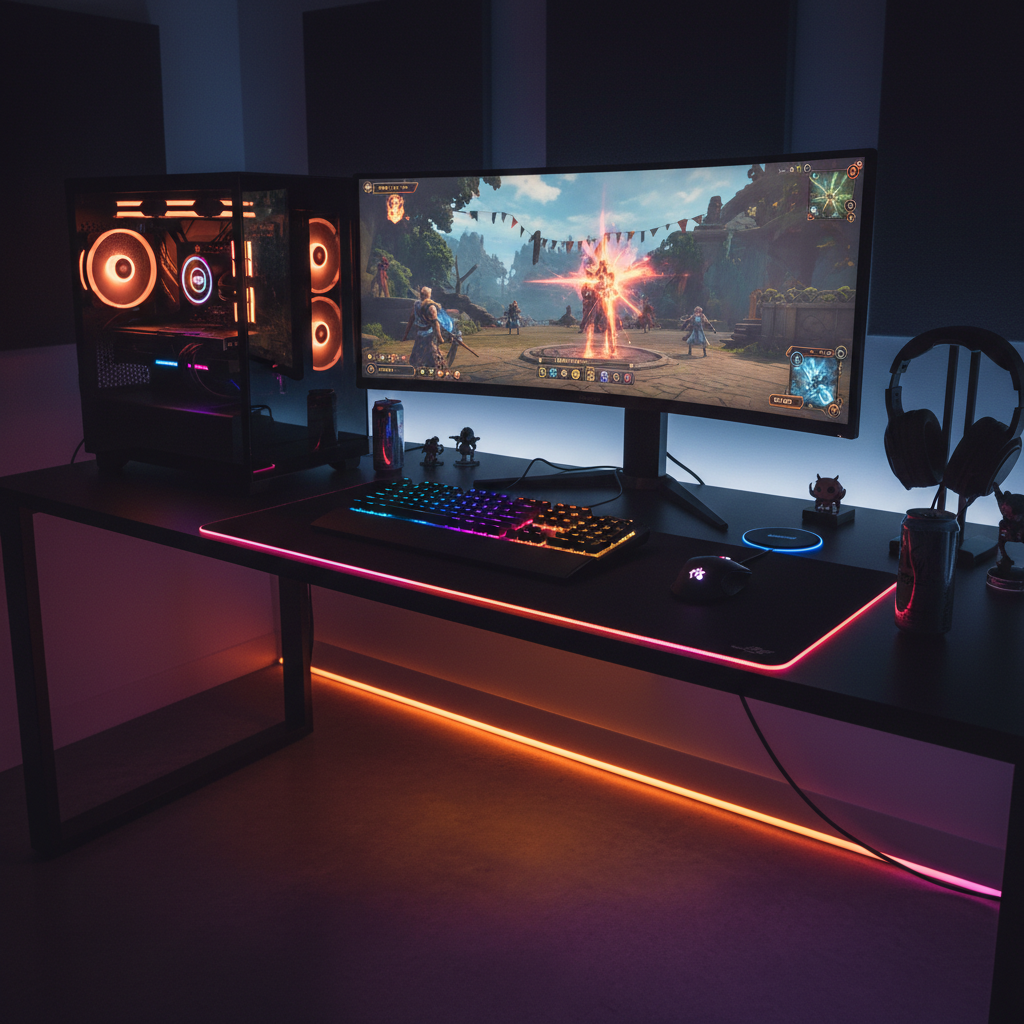
Nvidia has expanded G-Assist’s practical applications by integrating strong third-party plug-in compatibility. G-Assist can establish direct communication with various gaming peripherals produced by top manufacturers, including Logitech G, Corsair, MSI, and Nanoleaf. The integration of advanced features creates exciting new opportunities to build a more streamlined and intelligent gaming environment.
Envision a system where an MSI motherboard adapts its cooling profiles in response to the real-time thermal requirements during gameplay, while Logitech G devices modify their RGB lighting to match in-game events for a more interactive gaming atmosphere. The capability of AI to manage various hardware elements marks an important advancement in creating a smarter and more harmonized PC gaming system.
Nvidia stresses the existing AI processing power in desktops with high-performance GPUs as AI laptops become more prevalent in the personal computer market. Many modern AI tools require cloud-based computational resources, while Nvidia had earlier introduced the versatile ChatRTX application. G-Assist targets gamers specifically by addressing their unique needs and the specialized hardware setups they maintain, which feature powerful GPUs as essential elements of their gaming systems.
Nvidia emphasizes that G-Assist functions through a small and highly optimized language model (SLM), which executes locally on the user’s hardware for optimal efficiency. The text installation of the software initially needs 3GB of storage space, while adding the voice control functionality increases the total storage requirement to 6.5 GB.
G-Assist requires users to have a GeForce RTX 30, 40, or 50 series GPU with a minimum of 12GB dedicated video memory to function properly. The performance and responsiveness of G-Assist improve as they increase alongside the processing power of the host GPU because more powerful cards deliver faster and smoother AI assistance operations.
The implementation of laptop GPU support is planned for future development despite existing mobile GPUs’ performance limits, which could diminish G-Assist effectiveness in portable gaming environments.
Choosing to run G-Assist on the GPU locally brings immediate implementation challenges despite offering long-term benefits like improved user data protection and faster system response times. The internal tests using a mid-range RTX 4070 graphics card showed a distinct rise in GPU usage when the AI model was accessed.
Using the language model to perform inference and generate responses creates computational demands that directly affect other tasks that are running at the same time, especially those that require significant graphical processing like video games. The testing demonstrated that Baldur’s Gate 3 experienced about a 20% frame rate drop at full graphics settings when G-Assist was active.
G-Assist may worsen performance problems for users running demanding games at the limits of their system capabilities. G-Assist demonstrates much better performance and responsiveness in non-demanding applications, yet requires a powerful high-end GPU for regular operation to prevent gameplay performance issues.
The experimental nature of G-Assist becomes apparent through its intermittent slow response times and the existence of software bugs. Most users will find that fine-tuning both system settings and in-game configurations manually presents a more dependable and quicker method for achieving optimal performance.
G-Assist stands as a promising forward-thinking first move towards fully utilizing the powerful artificial intelligence processing capabilities present in today’s gaming computers. With GPU technology advancing at an incredible pace, we are closer to the capability of simultaneously running high-performance video games and complex AI models without interruption.
Nvidia’s G-Assist currently showcases an exciting yet unfinished glimpse into a future where artificial intelligence-driven gaming allows GPUs to render stunning virtual worlds and actively interact with players to optimize the overall gaming experience.