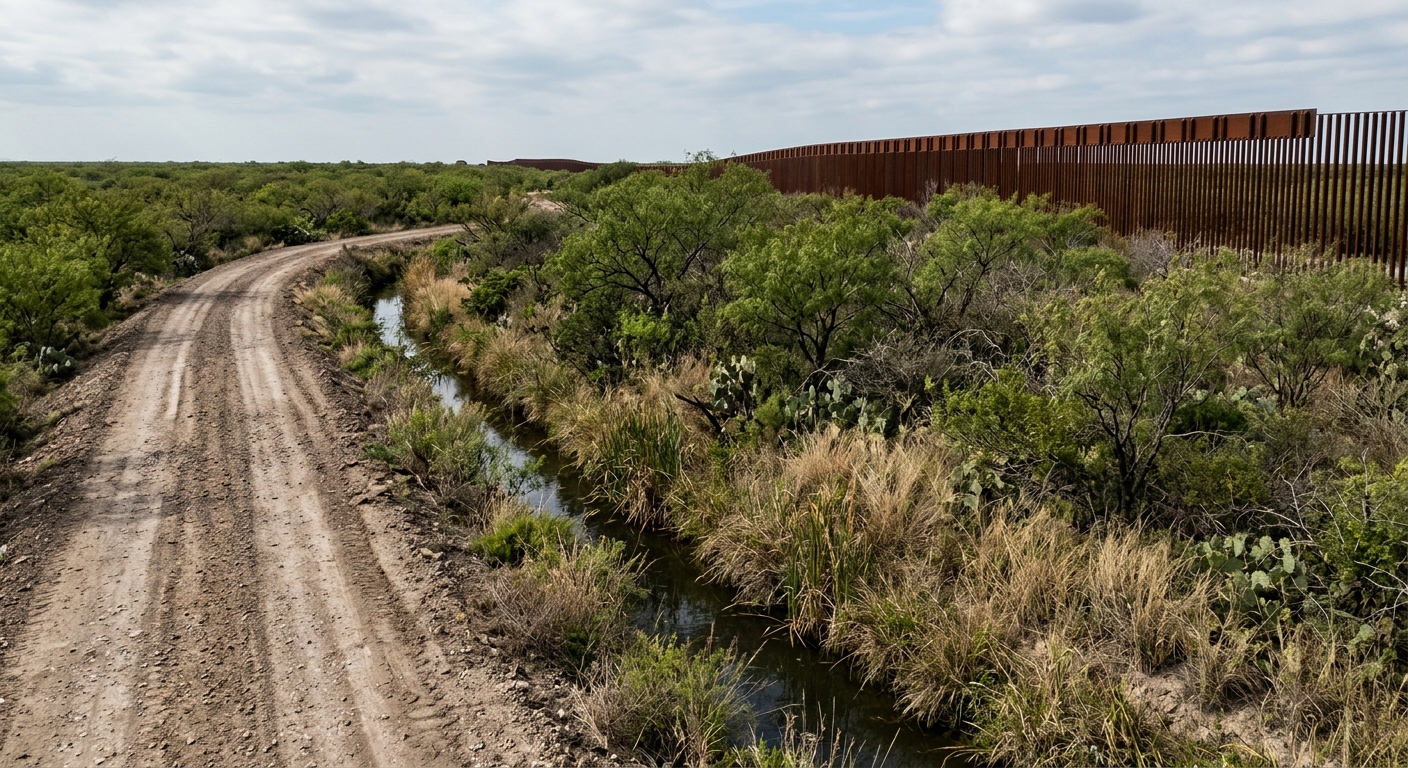
AI-generated illustration; not a photograph of the reported event.
- calendar_today October 27, 2026
Federal Border Wall Plans Face New Legal Hurdles in South Texas
The federal government is weighing whether to alter the route of a planned border wall segment in South Texas, potentially redirecting construction through the Santa Ana National Wildlife Refuge. This development follows ongoing legal challenges involving the original construction plans adjacent to the protected wildlife area.
Legal Dispute Over Land Access
The initial border wall plan called for 2.8 miles of construction along a levee next to the Santa Ana National Wildlife Refuge, near Alamo, Texas. However, the Hidalgo County Irrigation District No. 2, a public body supplying water to area cities, farmers, and ranchers, claimed that government contractors had trespassed on 60 feet of land owned by the district by the irrigation canal. The district sued Spencer Construction LLC and Royal Concrete Products LLC in September, seeking a restraining order to stop work on its property.
A state district court in Hidalgo County issued a temporary restraining order in July, later extended after the case moved to federal court. This order remains active as both sides await further legal proceedings.
Possible Rerouting Through Santa Ana Refuge
Amid the dispute, Assistant U.S. Attorney Lance Duke told a federal judge on October 14 that the government is considering the irrigation district's suggestion: move the border wall's alignment to pass through the Santa Ana National Wildlife Refuge rather than the irrigation district's land. “We recognize that will probably just create additional litigation from other interested parties,” Duke acknowledged during court proceedings.
A spokesperson for U.S. Customs and Border Protection (CBP) would not confirm the rerouting decision but stated that the agency remains committed to enhancing border security at the Santa Ana National Wildlife Refuge and is aware of the pending litigation.
Concerns Over Community and Environmental Impact
The Santa Ana National Wildlife Refuge, sometimes called the jewel of the national wildlife refuge system, encompasses 2,000 acres along the Rio Grande and is a well-known destination for residents and school groups in the Rio Grande Valley. The possible construction has raised local concerns since the first federal border security initiatives under President Donald Trump in 2017, with community members and lawmakers previously rallying to protect the area. Congress passed measures in 2019 barring funding for a wall within the refuge, but later federal funding mechanisms bypassed these restrictions.
Anthony Stambaugh, general manager of the irrigation district, testified in August that the presence of a wall on the district’s land could hamper access and maintenance along the crucial irrigation canal. The district's attorney, Lance Kirby, welcomed the prospect of moving the wall south to avoid the canal, while recognizing that new disputes might arise if construction shifted to the wildlife refuge.
Political and Legislative Context
U.S. Rep. Henry Cuellar, a Democrat from Laredo involved in preserving protections for the Santa Ana refuge, expressed concern over the potential rerouting of the border wall through the sensitive area. He has included language in the Homeland Security Appropriations bill for fiscal year 2027 to preserve the refuge's protections, though Congress is unlikely to consider the bill before year’s end. Cuellar stressed that while border security is important, there are alternatives to constructing walls through wildlife refuges or restricting community access to the Rio Grande.
Cuellar called for transparency from the Department of Homeland Security and CBP about proposed changes to the border wall alignment, including funding sources, potential impacts on the refuge, and possible alternatives under review.
Next Steps and Ongoing Uncertainty
The situation involving the Santa Ana National Wildlife Refuge and the Hidalgo County Irrigation District remains unresolved. The outcome may set important precedents for how border security initiatives interact with community, environmental, and legal concerns in South Texas and beyond.
Source: mysanantonio.com.