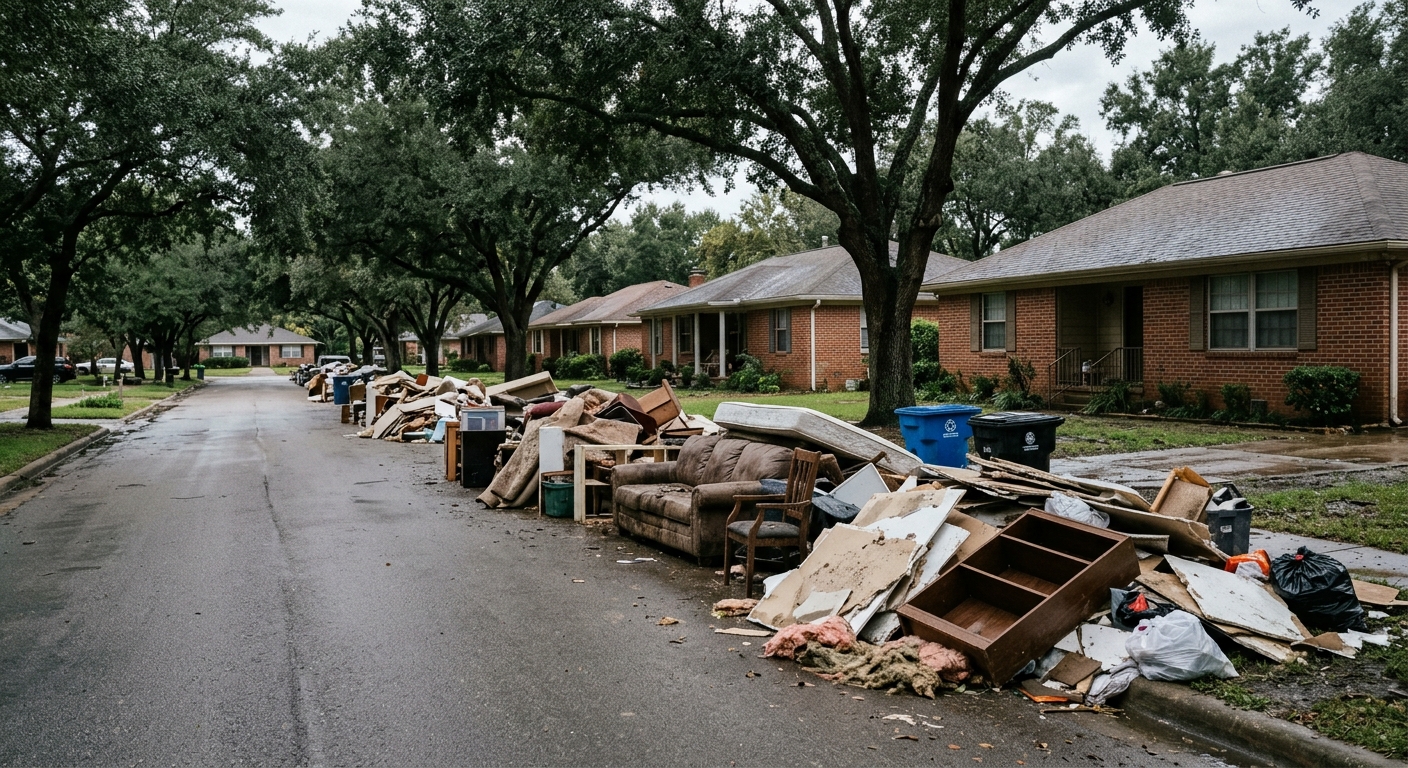
AI-generated illustration; not a photograph of the reported event.
- calendar_today October 22, 2026
FEMA Rejects Individual Assistance for July 2026 Texas Floods
The Federal Emergency Management Agency (FEMA) has declined a request for federal aid to individuals impacted by the July 2026 floods in Texas. The severe weather inundated homes in Uvalde and caused additional damage across Kerr County, marking the second major flooding event in two years for some communities.
Governor Abbott Reviews FEMA's Decision
Governor Greg Abbott and the Texas Division of Emergency Management are currently reviewing FEMA's decision to withhold fema individual assistance and are considering the process for appealing the denial, according to a statement from the governor’s office.
Importance of FEMA Individual Assistance
Disaster recovery experts emphasize that FEMA individual assistance is vital for helping residents in disaster-stricken areas cover initial costs, secure temporary housing, and replace essential items. "FEMA individual assistance was the big thing people were counting on and looking towards to be able to help them rebuild in a significant way," said Allison Brim-Estelle, a field director with the national disaster survivor association Rebuild.
Federal Emphasis on State-Led Disaster Response
In a statement, FEMA underscored its commitment to helping states recover, clarifying that it reviews aid requests carefully, taking into account factors such as insurance coverage, population vulnerability, recent disasters, disaster-related unemployment, and state fiscal capacity. The agency stated, "FEMA remains focused on empowering states to take the lead on their community response and recovery activities and is dedicated to providing support when federal assistance is warranted."
Recent policy shifts under the Trump administration have further increased expectations that states manage greater portions of disaster recovery. During a National Emergency Management Association conference, FEMA Administrator Cameron Hamilton remarked that states "must have the appropriate financial reserves" to initiate their own recovery process.
Texas Disaster Recovery Funding and State Concerns
Texas Division of Emergency Management Chief Nim Kidd, who serves with Abbott on the FEMA Review Council, recently cautioned state lawmakers about the need for increased state-level disaster recovery funding. Kidd noted that Texas currently allocates $37 million of its $1.9 billion emergency response budget for 2027—merely 2 percent—while federal funds cover the rest. With changes at the federal level and slower reimbursements, Kidd warned, Texas could soon face a very different recovery situation.
Kerr County Faces Ongoing Recovery Challenges
Communities in Kerr County, already recovering from devastating floods in July 2025, now confront further setbacks after the July 2026 storms. While local governments will receive some federal assistance for recovery costs—as announced by Abbott in September—individual disaster relief remains unavailable, leaving flood survivors in a precarious position. Compared to the influx of aid received in 2025, Kerr County leaders report reduced financial support and fewer volunteers in 2026, alongside longer waiting times for FEMA intervention.
Role of Philanthropy and Local Organizations
With FEMA's individual assistance denied, local nonprofits and philanthropy have stepped in to address immediate needs. The Community Foundation of the Texas Hill Country recently reported providing about $1.3 million in emergency aid to 947 households and temporary housing assistance to 58 families. Nonetheless, CEO Austin Dickson noted that these efforts accumulate "just a fraction of the dollars that are needed for recovery, which is long and expensive."
Calls for State Disaster Relief Fund
Advocacy groups like Rebuild are urging the state to establish a dedicated disaster relief fund for individuals. Brim-Estelle pointed to ongoing demand in areas like Kerr County, where many residents now rely on relatives, churches, or local organizations for support, and some have left the area due to insufficient assistance. She stressed the need for a clear plan from Governor Abbott: "Do you believe FEMA should provide individual assistance to survivors in Texas or … is the state going to pick up the tab?"
Ongoing State Support Measures
Abbott has requested federal tax relief for flood survivors and expanded eligibility for replacing Supplemental Nutrition Assistance Program (SNAP) benefits. Spokesperson Andrew Mahaleris stated, "Texas will deliver every necessary resource to communities impacted by the July storms and floods."
Uncertain Future for Texas Flood Survivors
As the state evaluates its next steps following FEMA's denial of fema individual assistance, communities across Texas continue to rely heavily on local and philanthropic support to navigate the lengthy and costly process of disaster recovery.
Source: feeds.texastribune.org.