- calendar_today August 22, 2025
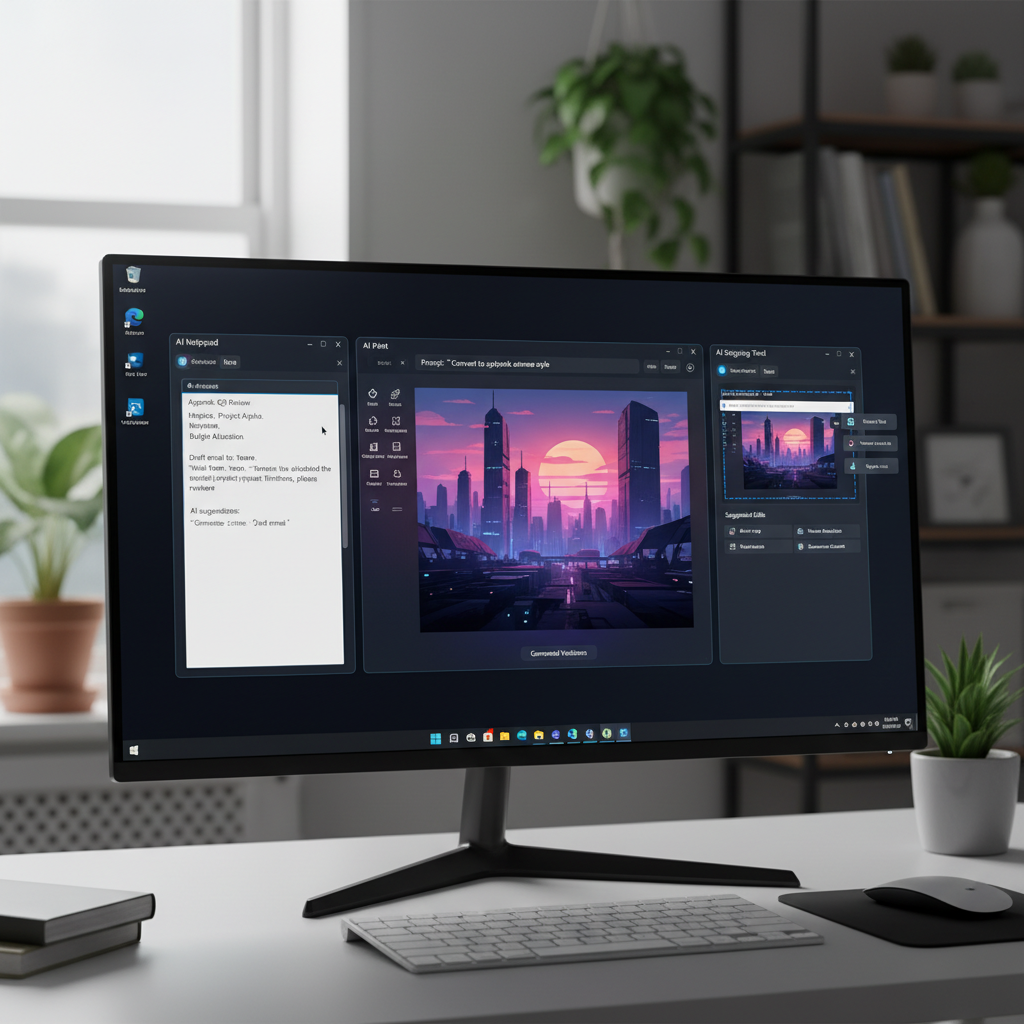
Microsoft is working behind the scenes on something with full force—adding artificial intelligence into the core of Windows 11’s most fundamental apps—while its forthcoming Windows Copilot keeps headlines. A Windows Central report claims that Microsoft is creating smart AI-powered capabilities for its native products—Photos, Snipping Tool, Camera, even MS Paint—based on These are not simply hypotheses for experimentation. These are the daily apps you use; they are about to quietly grow to be rather more potent.
Optical Character Recognition, or OCR, is among the most important enhancements Microsoft is developing. This function will enable users to extract text straight from images—something that, on first glance, seems straightforward but has enormous pragmatic consequences. Picture grabbing a screen grab of a street sign, a whiteboard from a Zoom call, or a product label. Windows would let you copy and paste the text straight from the picture rather than hand-transcribe the material. This kind of quality-of-life enhancement is just helpful; it does not require a flashy presentation to be remarkable.
Until now, this kind of capability has usually required premium tools or outside apps. Using its Neural Engine, Apple debuted a similar capability called Live Text for macOS and iOS; native support on Windows has been limited. Microsoft is closing that gap and doing it in a way that calls for no further downloads, no subscriptions, and no learning curve by including OCR straight into apps like Snipping Tool, Photos, and Camera.
OCR is one improvement in store, though; others abound. Additionally, testing image recognition tools that would let the Photos app identify objects, people, and pets in your images is Microsoft. Users could then split those components from the background. Want to have the background behind your dog in a picture deleted? Alternatively, isolate a product image for a presentation or online store. These new tools might enable those edits without using Photoshop or Canva. This is an illustration of artificial intelligence being folded into familiar apps—not by overwhelming the user with new options, but by making current chores faster and more accessible.
Concurrently, Microsoft Paint—yes, the same tool many of us used in elementary school—is undergoing an unexpectedly modern update. According to the paper, Paint might shortly embrace generative artificial intelligence capabilities. Enter a basic text prompt—something like “a cat riding a bike through Times Square”—and Paint would create an image based on that description. Using OpenAI’s DALL·E model to translate words into images, the technology resembles that of what drives Microsoft’s Bing Image Creator. Should Paint incorporate such of capability, it might transform from a nostalgic work of art into an easily accessible playground for artificial intelligence-created works.
Though they sound interesting, all of these updates probably depend on more recent hardware featuring something known as a neural processing unit, or NPU. NPUs are made especially to speed AI chores, unlike conventional CPUs or GPUs. Until lately, most NPUs were found in ARM-based chips made by Qualcomm, which some Windows laptops run. That is about to change, though. NPUs in AMD’s latest 7040-series CPUs and Intel’s forthcoming Meteor Lake chips will enable AI-ready performance on a wider spectrum of Windows machines.
Why should local NPU processing matter? First of all, it lets AI capabilities run straight on your gadget, free from depending on cloud services or an internet connection. Faster performance, lower latency, and more privacy are therefore results. You won’t have to worry about your documents or pictures being sent elsewhere for processing. Everything happens on your PC—safely and fast.
Currently, Windows 11 uses NPUs rather sparingly, mostly for background blur or noise reduction in video conferences. However, the foundation is being set for a far more extensive range of capabilities, and changes to programs like Paint and Snipping Tool indicate Microsoft’s intention to make artificial intelligence a standard component of the Windows experience.
The subtlety of this method makes it rather fascinating. Microsoft is not pushing consumers to adopt a new workflow or creating a lot of fresh artificial intelligence apps. Rather, they are improving the daily apps people use, which makes them somewhat faster, a little smarter, and quite more useful. AI is not a novelty but rather a subdued improvement. Of all the artificial intelligence, that could be the most practical type.