- calendar_today September 2, 2025
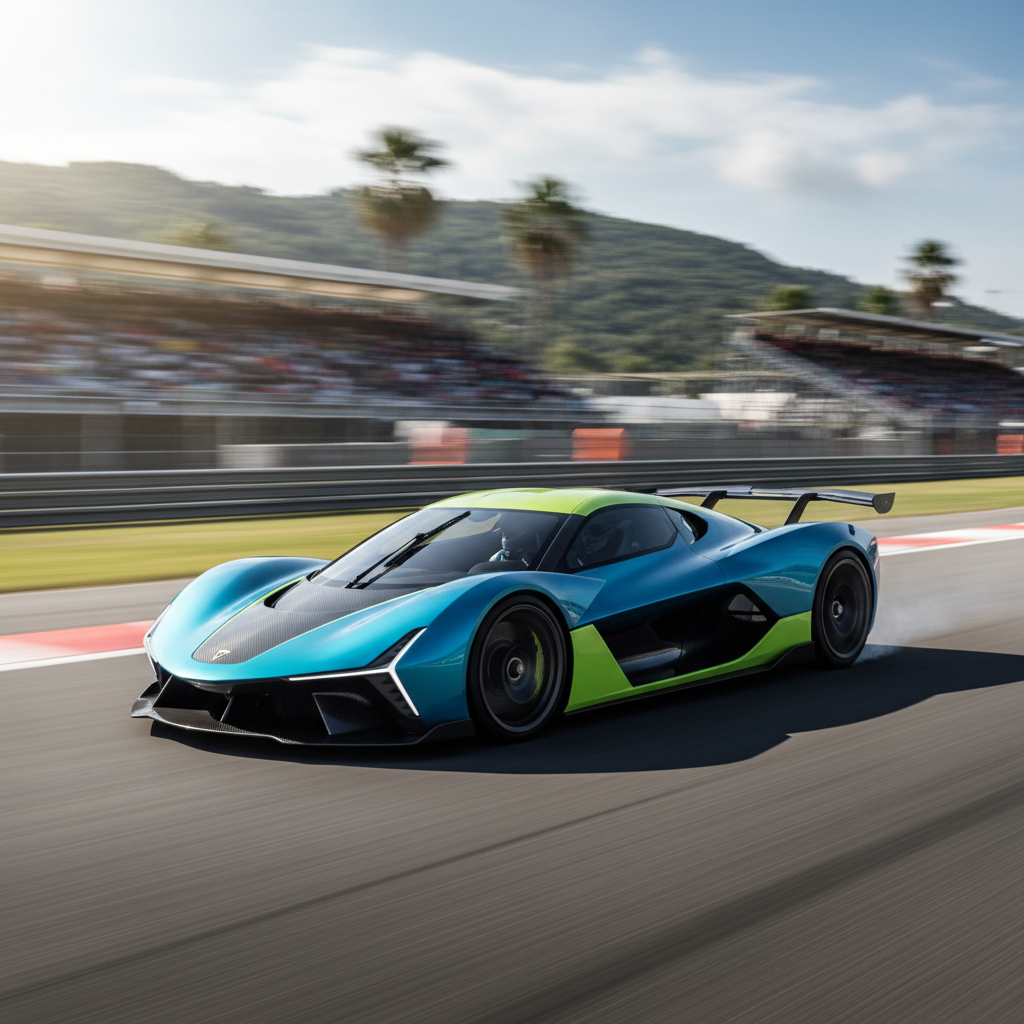
With the release of the ZR1X, a new hybrid Corvette combining great horsepower with electric torque and high-end engineering, Chevrolet has once more made another huge leap forward in performance innovation. Rising on the heels of the ZR1, the ZR1X is a statement rather than only a variation.
Without straying into the million-dollar price range, this machine firmly targets exotic giants from Europe by combining all-wheel-drive performance with plug-in hybrid power.
Unmatched Authority and Electrified Accuracy
Retaining its twin-turbocharged 1,064hp V8 engine and matching it with a front-mounted electric motor, the ZR1X builds on the already extreme ZR1 by generating a total output of 1,250 hp (919 kW). It is thus the most potent Corvette Chevrolet has ever built.
A 1.9 kWh battery pack upgraded from the E-Ray with 26% more charge capacity supports the hybrid system. This lets the front electric motor run with 145 lb-ft (196 Nm) of torque and 186 horsepower. These powerplugs taken together provide the ZR1X with a blazing 0–60 mph time under two seconds.
Chevrolet installed 16.5-inch carbon-ceramic brake rotors clamped by GM’s first-ever 10-piston calipers to control all this power. Under testing, these brakes enabled the ZR1X to slow down from 180 mph to 120 mph using an incredible 1.9 Gs of stopping power.
Still rather amazing are top speed figures. Aerodynamic improvements and a disconnecting front axle at 160 mph (257 km/h) help the ZR1X still reach 233 mph (375 km/h)—a figure validated using additional ballast to reflect the hybrid’s additional weight.
Although the ZR1X keeps razor-sharp performance, Chevrolet notes the car is heavier—estimated at 500 pounds more than the Z51 Stingray. Actually, the hybrid system lets the vehicle sustain 1 G of both lateral and longitudinal acceleration concurrently—a performance that says volumes about its cornering capacity.
The ZR1X fixes problems noted in the E-Ray, including front motor disconnects and torque steer. Chief Engineer Josh Holder claims that under high G-forces the team reprogrammed the control systems of the vehicle to adjust for tire deformation and false sensor data.
New drive modes such as Qualifying and Endurance especially address track use. Additionally there is a Push to Pass button that releases all 1,250 horsepower in quick bursts for best performance.
Chevrolet programmed the regenerative braking system to match the rear friction brakes, so enhancing predictability and helping to preserve chassis stability during deceleration. In first and second gears, torque is also limited—not to restrict performance but rather to safeguard drivetrain components unable of entirely harnessing the full power anyway.
Though expectations are low, Chevy has not stated the range of the ZR1X in electric-only mode. The E-Ray ran 3–5 miles (5–8 km) below 45 mph; the ZR1X will probably be same. This hybrid is meant to shatter records, not be efficient.
Given the base ZR1 price of $174,995, even a small increase in cost for the ZR1X would make it among the most reasonably priced 1,000+ horsepower vehicles available worldwide. Deliveries are expected to start in 2025, allowing Chevrolet one more year to shape what might become the ultimate American supercar.