
- calendar_today August 17, 2025
At a news conference ostensibly devoted to the details of a European Union trade deal, former U.S. President Donald Trump deviated from the script to return to one of his favorite topics: climate change and renewable energy. In typical Trumpian fashion, he described wind turbines as a “con job.” “Windmills,” as he called them, were driving whales “loco,” killing birds, and causing the deaths of people, he claimed. Trump’s theatrical claim-making is easy to ridicule, but he’s far from alone. Conspiracy theories and conspiracy-minded rhetoric about renewable energy—and wind power in particular—are common across the globe.
Trump frequently uses the term “windmills,” making the mock-heroic image a sort of shorthand for the climate denier’s playbook. These moral panics are not new, of course. In the 19th century, there were similar concerns that telephones would transmit leprosy or malaria. Both cases, then and now, show how rapid technological change can provoke anxieties—especially when that change is seen to directly threaten existing ways of living or traditional power structures.
The concern, based on academic research, is that these anxieties are rooted far more deeply than a single misinformed tweet or cable news headline. Once they take hold in a person’s cognitive framework, they are unlikely to be swayed by fact-checking or reassurance from scientific institutions. That makes it an existential problem for governments, businesses, and other institutions that want to ensure the clean energy transition is as fast and smooth as possible.
The history and prevalence of anti-wind conspiracies
While scientists have been warning about the planetary heating effects of carbon dioxide emissions since at least the 1950s, the initial climate communication around renewable energy was centered on breaking the dominance of fossil fuel companies. One of the more famous cultural references from that time period is a 1997 episode of The Simpsons in which the cartoon plutocrat Mr. Burns builds an enormous tower to blot out the sun and force the residents of Springfield to buy his nuclear power. That was intended as a satire, but it also reflected a common fear of that era: that those fossil fuel interests would work to delay the rollout of renewables at all costs.
History has shown those fears were not without merit. In 2004, then–Australian Prime Minister John Howard called together a coalition of fossil fuel executives in what became known as the Low Emissions Technology Advisory Group. Far from advising on how to speed the energy transition, the stated purpose of the group was to find ways to slow down renewable energy growth to protect the dominance of coal, oil, and gas.
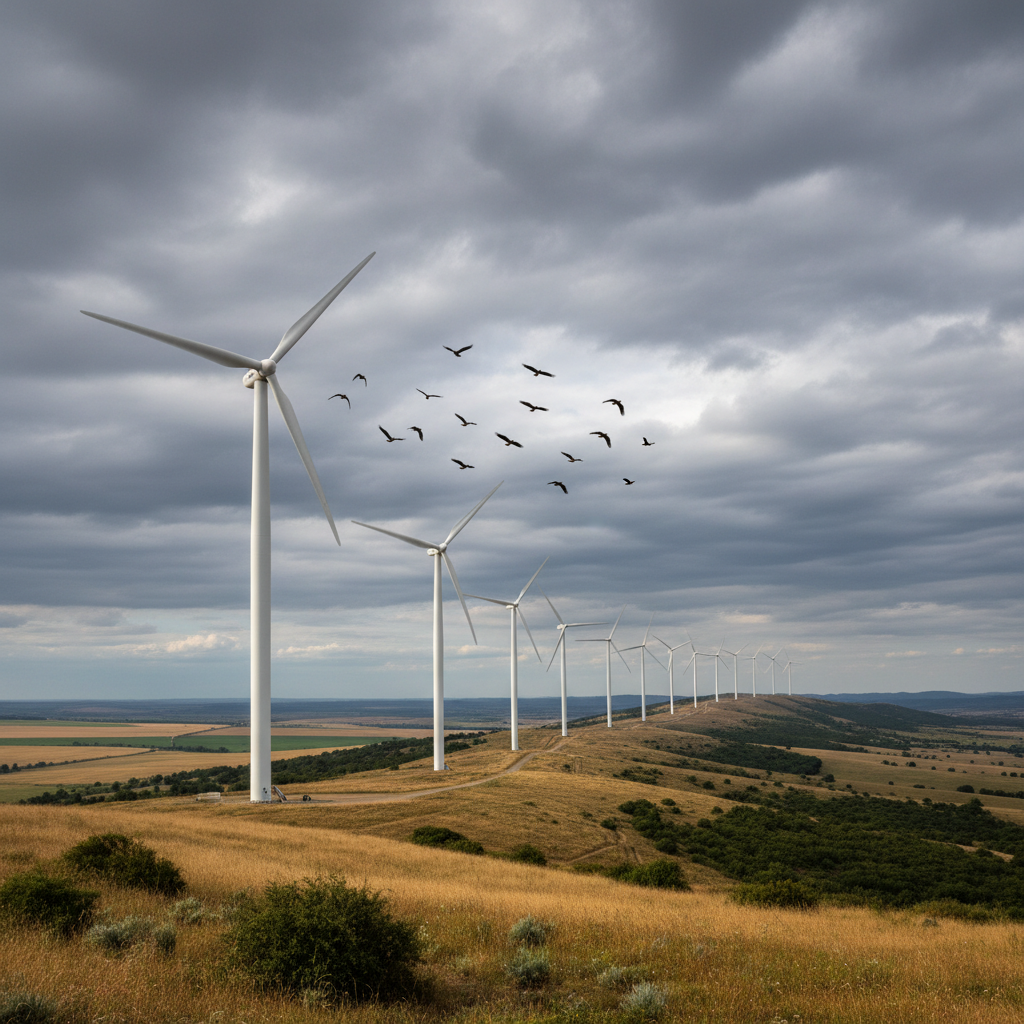
Wind farms also came under direct public attack. While oil fields, coal mines, and nuclear power plants tend to be hidden from view (either underground or in remote locations), wind turbines are highly visible. It’s why many wind projects get built on ridgelines or open plains. It’s also one of the main reasons why wind energy has become the favored whipping boy and scapegoat for conspiracy theorists. Theories of “wind turbine syndrome” became so persistent over the years that the World Health Organization finally had to step in to declare it a “non-disease.”
Academic studies have found similar patterns. Wind turbines are far more likely to attract opposition than support, not because of a person’s age, education, or other demographics, but because of their belief systems. A German study led by Kevin Winter found that conspiracy thinking was by far the strongest predictor of anti-wind opposition, far outweighing demographics or partisan identification. This has since been borne out in more recent surveys conducted in the U.S., U.K., and Australia that found that a propensity to believe in conspiracy theories—whether about climate change, secret government plots, or energy security—was closely correlated with the perception that wind turbines were causing various problems.
Importantly, facts are an almost immaterial influence on that calculus. Presenting someone with evidence that wind farms do not poison groundwater, mass-kill birds, cause blackouts, or have other harmful effects is unlikely to change their minds about wind turbines. This is because the opposition is based on a deep-seated worldview, not a simple error or misinformation. As Winter and his colleagues put it, the opposition is “rooted in people’s worldviews.”
Wind farms themselves are at times almost secondary to what they represent. On one side, they can be seen as beacons of progress, innovation, and climate action. To the other, they are symbols of government overreach, powerlessness, and unasked-for change.
Digging deeper, though, is a more fundamental cultural problem: The fossil fuel era, after all, was an era of unprecedented growth and prosperity. For some, recognizing and reflecting on its environmental costs runs counter to that golden narrative. In the words of the authors of a 2022 academic review of the topic, the refusal to confront and reflect on the negative effects of fossil fuel reliance is an “anti-reflexivity” tactic. Trump’s rhetoric about energy, foreign policy, and trade—often with an overtly nostalgic air for the coal, oil, and gas era—is not too far from that same frame.
Identity politics has its own role to play as well. In certain corners of online communities like parts of the “manosphere,” being “climate woke” is construed as emasculating or otherwise weak. For many baby boomers, white heterosexual men in particular, the energy transition can be an unsettling development in a world that, at least culturally and politically, they once felt they could dominate. Trump was one of the loudest exponents of this phenomenon, of course. The clean energy transition, then, is not just a technological and business phenomenon: It’s cultural, and it’s existential.


