- calendar_today August 7, 2025
Why the New China Tariffs Are a Disaster for Board Games
The board game industry is having a bad week. A usually resilient community of designers, publishers, and players built on innovation and collaboration, but also low margins, could soon find its future in jeopardy after a surprise 54 percent tariff on Chinese-made products imported to the United States was announced this week.
The news was met with a rare, emotional outpouring from Jamey Stegmaier, the designer of several global hits including Scythe and Wingspan, and a business leader within the hobby gaming community.
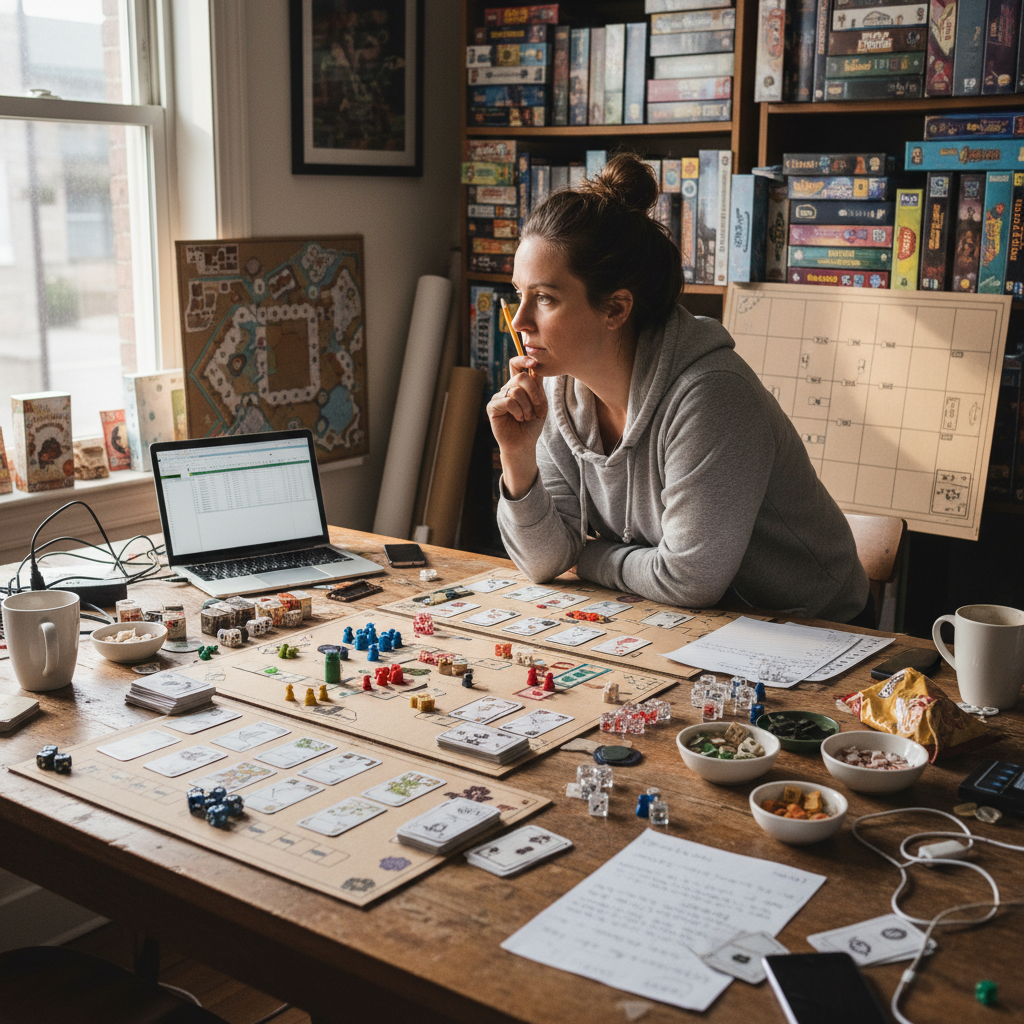
“I tried to work on a new game last night that I’m brainstorming, but it’s really hard to create something for the future when that future looks so grim,” Stegmaier wrote on his blog. “I mostly just found myself staring blankly at the enormity of the newly announced 54 percent tariff.”
A Designer Reimagines the Industry in China
SteamSailer is hardly alone in his anxiety. The US board game market, which is still dominated by imports, is built on a massive production infrastructure based in China.
In addition to being the spiritual center of modern tabletop design, Germany is one of the few countries with a large-scale board game production facility, but while some companies there handle their domestic production, nearly all US game publishers contract China to do the bulk of the work.
From printed cards to custom plastic miniatures and wooden tokens, die-cut game boards, and specialty dice, the most important manufacturing decisions for publishers take the China option into account.
The low labor and production costs and high quality of Chinese board game production facilities have made it impossible for producers in the US and elsewhere to offer a real alternative. As Stegmaier recounted on his blog, he was recently quoted $10 for a single empty game box by an American manufacturer.
By comparison, he could spend the same amount and get the game’s board, packaging, and components produced in China.
This is what makes the recent tariff so painful for publishers. Most in the US industry, especially small and medium-sized companies, work on slimmer and slimmer margins. The prospect of this change—without time to prepare or react—has the whole community aghast.
Other publishers are speaking out, too. Meredith Placko, CEO of veteran publisher Steve Jackson Games, wrote that the company was in the same situation as most in the industry.
“If you’ve been wondering why every board game publisher I know is in a panic, it’s this: without Chinese manufacturing, the current American board game industry would not exist. Some people ask, ‘Why not manufacture in the US?’ I wish we could,” Placko wrote on her blog.
“But the infrastructure to support full-scale boardgame production—specialty dice making, die-cutting, custom plastic and wood components—doesn’t meaningfully exist here yet. I’ve gotten quotes. I’ve talked to factories. Even when the willingness is there, the equipment, labor, and timelines simply aren’t.”
As a result, Placko framed this change as more than just a logistical reorientation. The new tariffs are “not just a policy change, not just a simple business inconvenience, it is a seismic shift,” she wrote.
Steve Jackson is one of the giants of the industry, but Rob Daviau, the co-founder of Restoration Games and designer of the first entry in the wildly popular Pandemic Legacy series, has been making similar comments online for months. “Pretty much every business meeting has been some version of an existential crisis about our industry,” Daviau wrote on Twitter last year.
Speaking to BoardGameWire, Daviau was more specific, predicting a “great collapse in the hobby gaming market in the US” if such a tariff were put in place.
Gamers Could Pay, Too
The ripple effects from this could also affect players, even if prices stay the same. As a rush of importation costs hits companies all at once, games are likely to get more expensive to purchase. To absorb those costs, some companies will need to compromise production quality to produce cheaper components to hit their prices. Others will simply cancel or scale back new releases.
Local game stores, which have been struggling against Amazon and other online retailers, also face a potential sales decline as gamers either choose to play the backlogs already crowding their homes or buy games online instead.
“In a few months, US companies will lose a lot of money and/or go out of business,” Stegmaier wrote. “And US citizens will suffer from extreme inflation.”
The Growing Backlash
Solutions are emerging, of course. Some publishers will no doubt ship their products through distributors based outside the US. European consumers, for example, are much less affected by the tariffs and could theoretically serve as an intermediary between US companies and Chinese manufacturers.
But that also represents no real solution for American businesses, as Stegmaier also pointed out, noting that 65 percent of his sales were still domestic. The math will still hit hard.
For the thousands of games that are already in production and en route to the US from Chinese factories, there is little that can be done to mitigate the cost. Chris Solis, the owner of Solis Game Studio in California, wrote on Twitter that he had “8,000 games leaving a factory in China this week and now need to scramble to cover the import bill.”
The Game Manufacturers Association (GAMA), which represents board game publishers in the US, has lobbied directly to exempt board games from the new tariff. So far, with an announcement made as late as Monday, that has not yet led to changes.
A game industry in crisis
It’s unclear how the situation will develop from here, but in the coming weeks and months, the industry could face one of the largest crises in its still relatively young history.
A business built on so much optimism, so much fun, and so much collaboration has suddenly found itself desperately trying to figure out how to survive.