- calendar_today August 12, 2025
Market Growth Fuels Investor Interest
Texas continues to dominate national real estate headlines in 2025, fueled by strong population growth and a booming economy. Major metros like Houston, Dallas-Fort Worth, Austin, and San Antonio remain top investment hubs, with suburbs expanding rapidly.
Data from the Texas Real Estate Research Center shows a 4.5% increase in home sales in February, driven largely by affordable housing shortages and job growth in tech, energy, and manufacturing sectors.
Despite mortgage rates stabilizing near 6% and inflation cooling to 2.8%, demand remains high, particularly in rapidly developing suburbs like Frisco, Pearland, and Round Rock.
Build-to-Rent Communities Expand Across the State
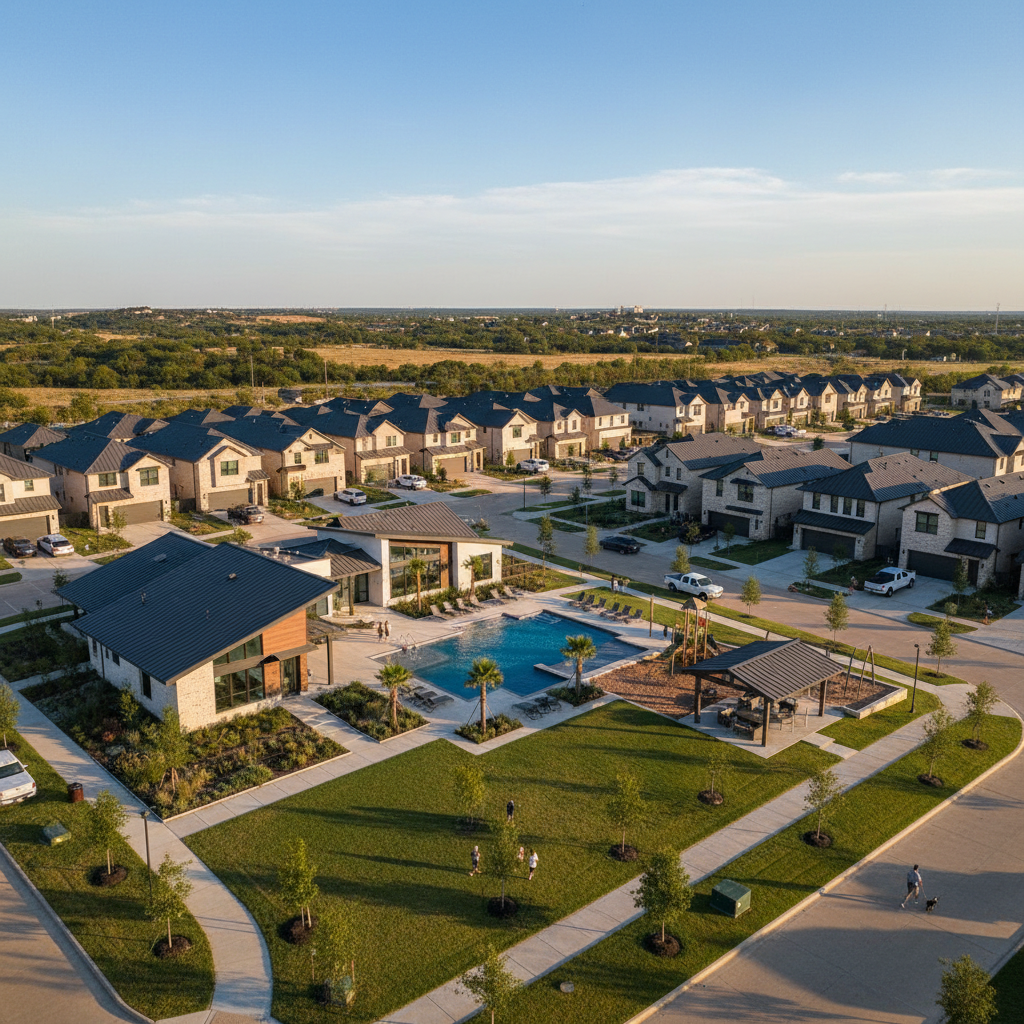
Build-to-rent (BTR) neighborhoods are proliferating in Texas, appealing to millennials, remote workers, and families priced out of homeownership. Projects in suburbs such as Cedar Park and Katy feature energy-efficient homes with amenities like community pools, fitness centers, and smart home technologies.
Institutional investors are backing these developments as stable, long-term income sources. According to Yardi Matrix, Texas leads the nation in BTR unit construction in 2025.
Secondary Cities Gain Momentum
While Austin and Dallas remain strongholds, cities like Fort Worth, El Paso, and McKinney are attracting new investors. Fort Worth’s lower entry prices and expanding job market have pushed rental demand, especially in neighborhoods near the Texas Motor Speedway and medical districts.
El Paso benefits from cross-border commerce, affordable housing, and growing industrial sectors, while McKinney’s suburban appeal continues to rise for families seeking quality schools and community amenities.
Mortgage Rates and Affordability Shape Investment Strategies
Texas investors face balancing acts. High demand keeps prices rising, with median home prices in Houston surpassing $350,000. However, relatively low property taxes and lack of state income tax ease affordability pressures compared to other states.
Mortgage rates at 6% have moderated some buyer enthusiasm but haven’t slowed overall market momentum. Investors increasingly seek multifamily and mixed-use developments to diversify income streams.
Commercial Real Estate Evolves with Market Needs
Texas commercial real estate is adapting rapidly. Office vacancy rates in downtown Dallas remain elevated, but suburban office parks and flex spaces are thriving, particularly near transportation hubs.
Industrial and logistics real estate are growth engines—Dallas-Fort Worth, Houston, and San Antonio continue to attract distribution centers servicing national supply chains.
Retail sectors evolve into mixed-use formats combining housing, entertainment, and shopping, especially in revitalized urban districts.
REITs and Funds Offer Accessible Market Exposure
For investors reluctant to manage properties directly, REITs focusing on Texas multifamily and industrial assets provide diversified exposure. Funds like Vanguard Real Estate ETF (VNQ) and regional-focused private equity continue to perform well amid Texas’s sustained growth.
What to Watch in Texas Through 2025
Key factors shaping Texas real estate this year include:
- Continued tech and energy sector expansions in Austin and Houston
- Infrastructure investments improving connectivity in growing suburbs
- Climate concerns around flooding and heat impacting coastal and urban areas
- Housing policy debates addressing affordability and new development regulations
For the latest updates on Texas real estate trends, market forecasts, and investment insights, subscribe to the Lone Star Property Report.