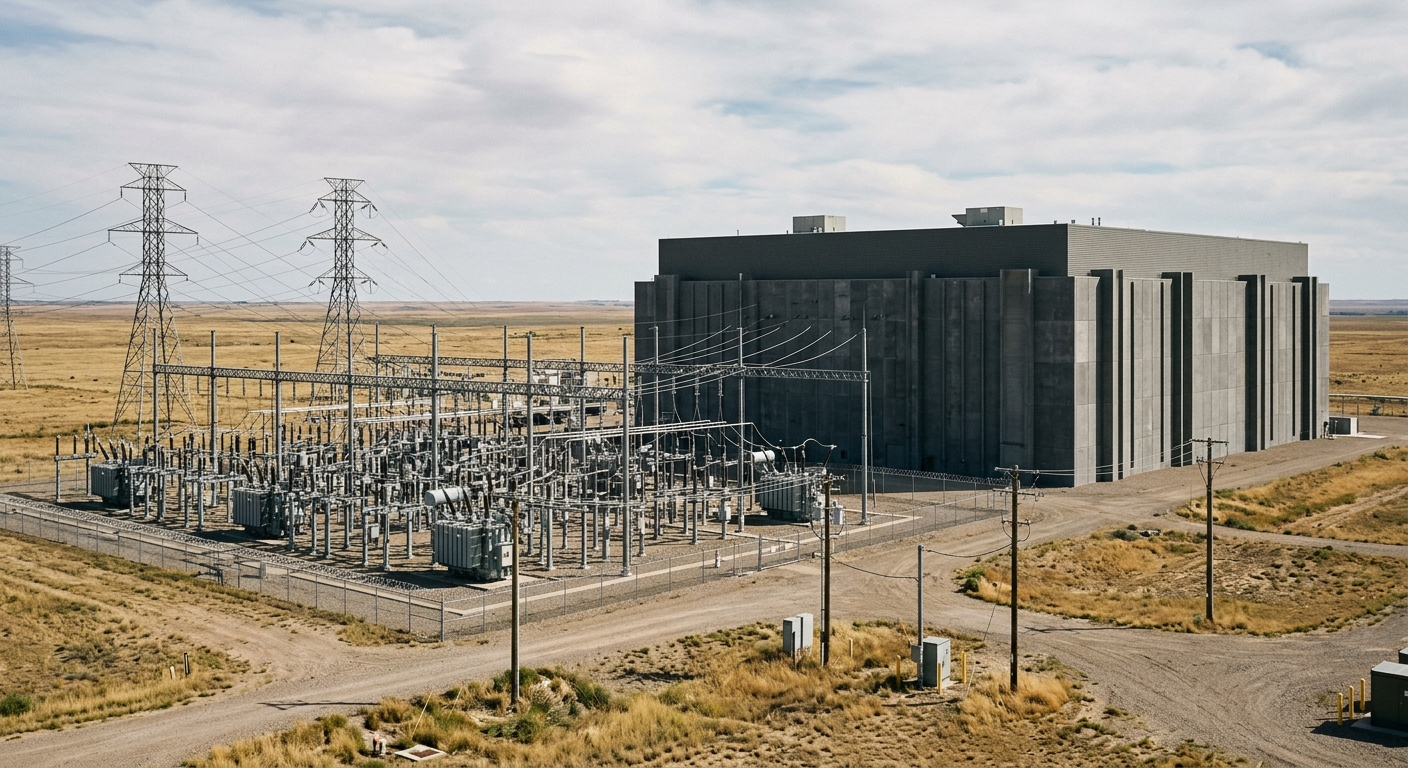
AI-generated illustration; not a photograph of the reported event.
- calendar_today August 11, 2026
The Texas grid is experiencing an unprecedented surge in demand, with interconnection requests now exceeding 474 gigawatts—most driven by the rapid expansion of data centers across the region. This unprecedented volume has prompted the Texas Public Utility Commission (public utility commission) to consider significant changes to how these facilities contribute to the electric infrastructure necessary for reliable service.
Data Centers Propel Texas Grid Requests
Roughly 90% of the grid’s new capacity requests come from data centers, highlighting their central role in the state’s evolving energy landscape. These facilities, essential to businesses and consumers alike, power massive digital workloads and cloud services, resulting in tremendous stress on the electricity supply and infrastructure throughout Texas.
Proposed Rule Targets Interconnection Costs
In response to this trend, the public utility commission has proposed a new rule requiring large electricity users—especially data centers—to make substantial upfront payments and cover the costs of direct electric infrastructure such as wires and substations connecting to their sites. The intent is to ensure that these high-demand customers pay the interconnection costs needed to serve them, rather than transferring those expenses to general ratepayers across the state.
Questions Around Grid Upgrades and Shared Benefits
While the proposal addresses immediate infrastructure funding at the service point, it leaves open the question of whether data centers should fund larger grid upgrades that go beyond their property lines. These larger-scale improvements, known as transmission costs, may serve multiple customers—not just the initiating data center—making their allocation complex. The public utility commission is seeking input on whether the definition of interconnection costs should be expanded to include broader system enhancements that facilitate load serving for a variety of users.
Governor’s Audit on Electric Infrastructure Responsibility
Governor Greg Abbott has called for a comprehensive audit to clarify data centers’ financial obligations regarding electric infrastructure. The governor has emphasized that data centers should contribute their fair share to the construction and maintenance required to support their capacity requests, preventing further cost shifts onto Texas residents and businesses.
ERCOT Planning and the Role of Capacity Requests
The unique growth in capacity requests has also tested ERCOT planning mechanisms, with grid planners now faced with balancing the needs of data center growth against the reliability for other consumers. The outcome of these deliberations will have lasting effects on how Texas encourages both economic development and sustainable infrastructure funding across the region.
Debate Over Broader Infrastructure Funding
The heart of the debate is whether data centers should bear the full weight of all electric projects identified as necessary to serve their new loads, or whether certain upgrades—especially those offering broader grid benefits—should fall under shared costs. Stakeholders argue that while large customers should be responsible for direct interconnection and site-specific upgrades, investments that strengthen the grid for future demand or multiple users may warrant cost-sharing models.
Next Steps for Policy and the Texas Energy Community
The public utility commission is still gathering input from utilities, customers, and local communities throughout Texas. Final rulings on infrastructure funding and transmission costs are expected to set important precedents for future load serving requests, not just from data centers but from other large-scale energy consumers.
As the Texas grid adapts to meet the challenges of the digital age, balanced solutions will be essential to maintain reliability, economic growth, and fairness for all users. The outcome of these regulatory discussions will shape not only the landscape for data centers but also the electricity future for communities throughout the region.