
- calendar_today August 13, 2025
Texas continues to be a bellwether for national commercial real estate trends in 2025. While higher interest rates and macroeconomic uncertainty have tempered the breakneck pace of development seen in previous years, the Lone Star State remains a hub of commercial activity, attracting investment through its pro-business climate, growing population, and regional economic diversity.
From Dallas-Fort Worth to Austin, Houston, and San Antonio, each metro is following a slightly different path to post-pandemic normalization. Yet across the board, developers and investors are doubling down on sectors like industrial, data centers, multifamily, and mixed-use projects.
Here’s how Texas’ commercial real estate market is navigating recovery and reinvention in 2025.
1. Dallas-Fort Worth Leads with Logistics and Data Center Strength
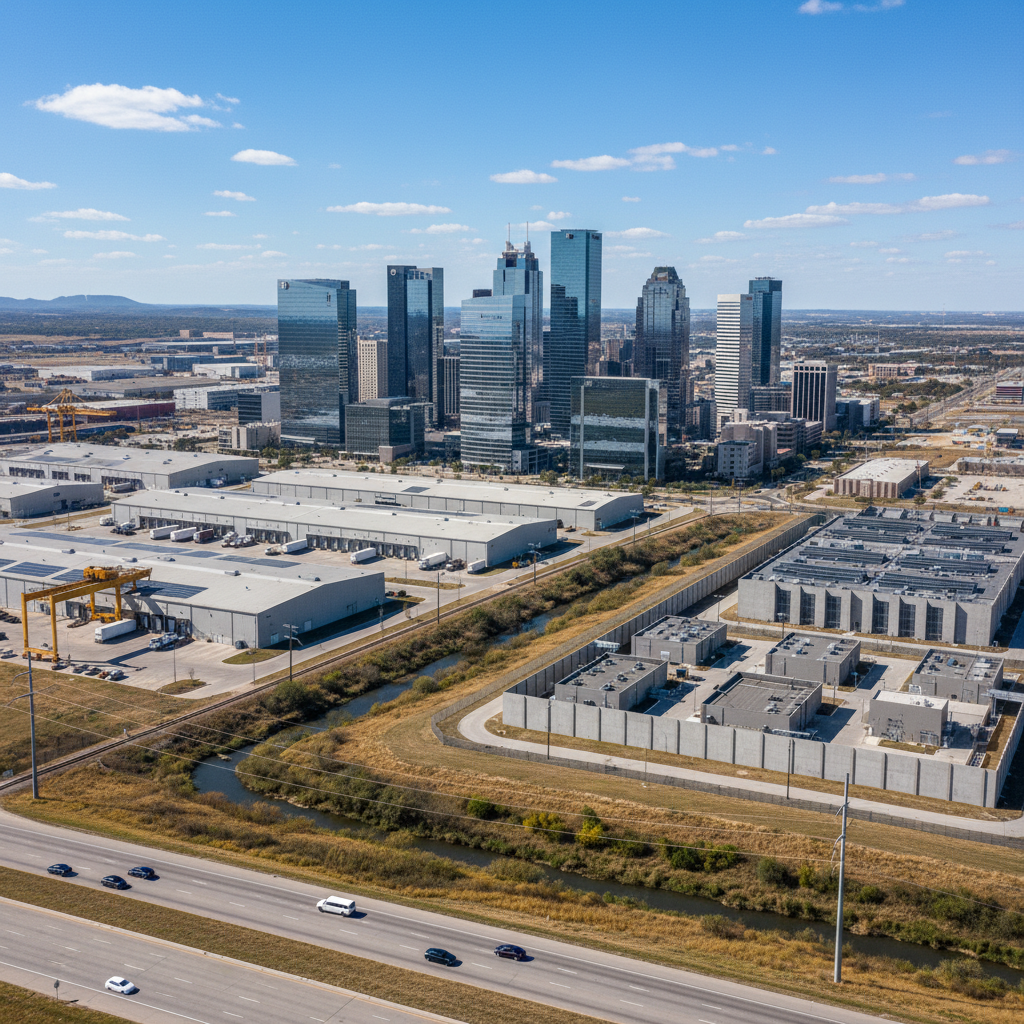
The Dallas-Fort Worth metroplex (DFW) remains one of the nation’s top industrial markets. With over 35 million square feet under construction in early 2025, according to CBRE, the region is fueled by e-commerce growth, third-party logistics firms, and data infrastructure expansion.
Major developments in South Dallas and AllianceTexas continue to attract national tenants, while demand for cold storage and last-mile delivery facilities remains robust. Vacancy has ticked up slightly to around 6.2% due to speculative builds, but absorption is steady.
DFW is also emerging as a data center powerhouse. Low energy costs, favorable tax incentives, and a strong fiber backbone are drawing hyperscalers and colocation operators to the area. Northern suburbs like Plano and Garland are seeing new groundbreakings aimed at supporting AI-driven cloud services.
2. Houston CRE Adapts to Energy Transition and Office Shifts
Houston’s commercial landscape in 2025 reflects the city’s continued transition from a fossil fuel-centric economy to a broader energy and innovation hub. Office space, once the lifeblood of the local market, is undergoing reinvention.
Downtown and the Energy Corridor have reported elevated vacancies above 25%, especially in Class B buildings. However, new trophy office towers offering wellness amenities, ESG certifications, and flexible configurations are seeing leasing momentum—especially from engineering, legal, and life science tenants.
Houston’s industrial market remains strong, particularly along the Port of Houston and I-10 corridor. Warehouse demand is supported by petrochemical exports, construction materials, and regional distribution. Meanwhile, Houston’s retail sector is showing resilience with growing demand in suburban centers like Katy and The Woodlands, driven by new residential growth.
3. Austin’s Growth Slows but Demand Remains High
After a decade of meteoric expansion, Austin’s commercial market is cooling slightly but remains fundamentally strong. The tech sector, once the engine of downtown office leasing, is adjusting to layoffs and remote work norms. Sublease space has increased, pushing vacancy near 21%.
Still, Class A space with top-tier amenities in the CBD and Domain area continues to command interest from professional services firms and startup spinouts.
Multifamily demand in Austin remains solid, particularly in suburbs like Pflugerville, Round Rock, and Leander. Developers are shifting focus to mid-market units and workforce housing as affordability pressures mount. Rent growth has slowed to around 2.9% year-over-year, but occupancy remains high across most product types.
Retail development is leaning into mixed-use and experiential formats. Projects like the East Riverside Corridor continue to evolve as lifestyle hubs with a blend of retail, food, and residential offerings.
4. San Antonio Emerges as a Stable Investment Market
San Antonio’s commercial real estate market is gaining traction among investors seeking stability and yield. The city’s diversified economy, large military presence, and relatively affordable cost of living are drawing more institutional interest.
The industrial market remains tight, especially near I-35 and Loop 410, with vacancy around 4.7%. Developers are focusing on smaller warehouses and infill opportunities as land availability shrinks.
Office space is more balanced in San Antonio than in other Texas metros. While hybrid work has softened demand, vacancy has remained under 18%, with government, healthcare, and cybersecurity firms providing steady occupancy.
Multifamily continues to grow, with suburban submarkets like Schertz and New Braunfels attracting young families and military personnel. Rent growth is steady, and construction is focused on garden-style and low-rise communities.
5. Smaller Cities and Border Markets Attract New Capital
In 2025, secondary and tertiary markets across Texas are gaining visibility from developers and investors priced out of the big metros. Cities like Lubbock, Waco, McAllen, and Tyler are seeing rising interest due to university expansions, manufacturing projects, and border trade growth.
- Laredo and El Paso are benefiting from nearshoring trends and US-Mexico trade. Industrial space along the I-35 corridor is in short supply, with developers racing to meet logistics demand.
- College Station and Denton are expanding their medical and education-related commercial footprints.
- The Rio Grande Valley is experiencing a retail and healthcare construction wave, as population growth accelerates.
These areas offer lower entry costs and less competition, but developers face challenges around infrastructure, permitting, and construction labor shortages.
6. Capital Markets Remain Tight, Favoring All-Cash and Local Buyers
Across Texas, commercial real estate investment activity has slowed compared to the peak years of 2021–2022. Higher borrowing costs and cautious underwriting are making it harder to pencil deals, especially for office and retail assets.
However, private capital and family offices remain active, especially in the industrial and multifamily sectors. According to MSCI, transaction volumes across Texas were down 24% year-over-year in Q1 2025, but the drop has started to level off.
Cap rates have expanded, but demand for stabilized properties in strong locations persists. Local and regional banks are lending selectively, often favoring repeat borrowers with strong balance sheets.
7. Construction Costs and Zoning Challenges Slow New Supply
Despite demand in several sectors, new construction across Texas is being throttled by higher material costs, labor constraints, and lengthier entitlement timelines.
Austin and Dallas in particular are seeing zoning bottlenecks that are delaying apartment and mixed-use starts. Houston, with fewer regulatory barriers, remains more development-friendly—but even there, builders face land pricing and utility access issues.
Some developers are turning to adaptive reuse—converting underutilized office or retail spaces into residential, medical, or light industrial uses. These conversions are gaining traction in Houston’s Greenspoint area, downtown San Antonio, and pockets of South Dallas.
8. Sustainability and Infrastructure Are Long-Term Anchors
Texas continues to attract ESG-conscious investors, with LEED-certified buildings and renewable energy integration becoming key selling points. Dallas and Austin are leading the state in solar-powered CRE developments and EV infrastructure.
Federal infrastructure funding is also playing a role in shaping commercial demand. Expansions to highways, airports, and broadband in rural Texas are laying the groundwork for future industrial and distribution activity.
Meanwhile, state-level incentives for semiconductor manufacturing and clean energy projects are creating new demand for specialized industrial facilities.
Texas CRE 2025: A Complex but Promising Landscape
Texas’ commercial real estate market in 2025 reflects a state in transition—balancing rapid growth with the headwinds of capital tightening, construction inflation, and evolving space demand. While no sector is immune to the broader economic climate, the state’s population growth, infrastructure investments, and geographic diversity provide a strong foundation for long-term resilience.
For investors and developers, the message is clear: success in Texas today means adapting quickly, building smarter, and targeting emerging growth corridors with long-term fundamentals.


