- calendar_today August 20, 2025
.
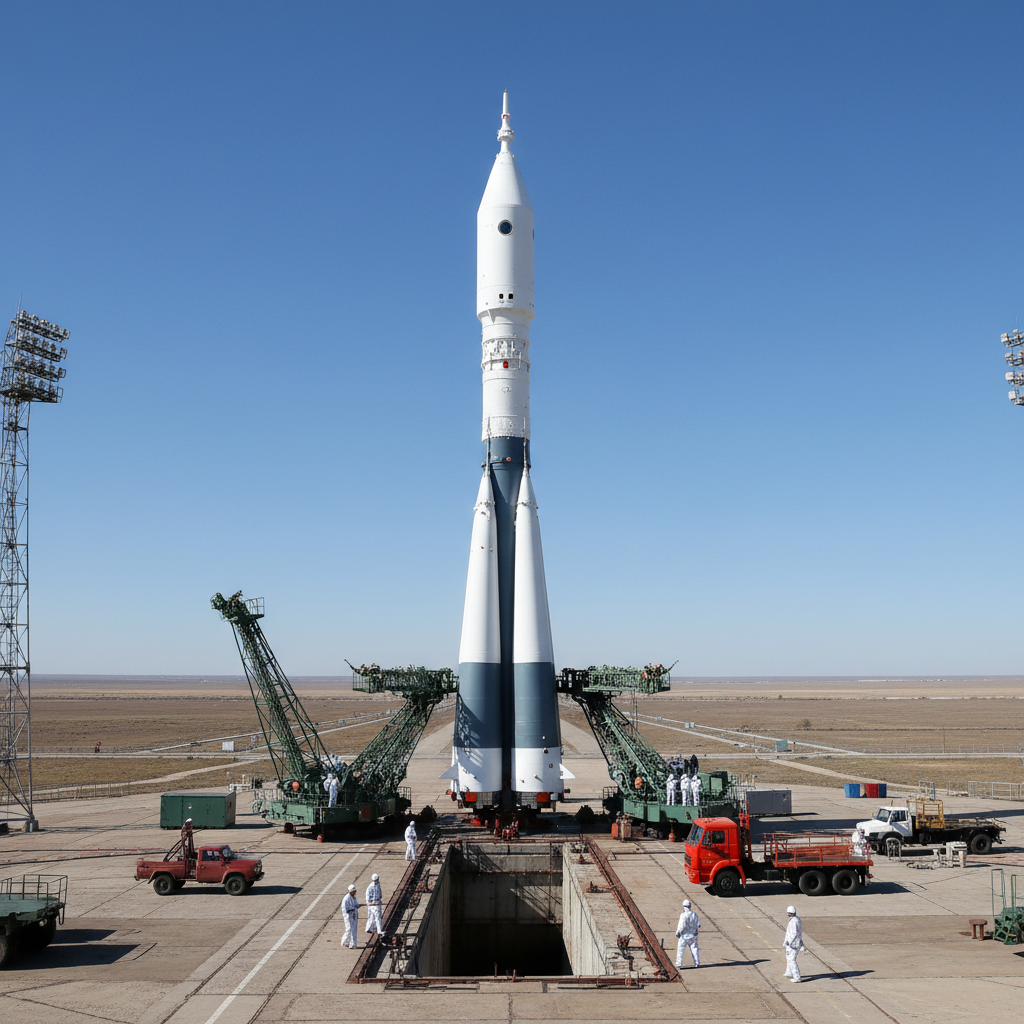
Russia is planning to launch its newest rocket, Soyuz-5, on its first flight sometime before the end of the year. Dmitry Bakanov, the head of the Russian space agency Roscosmos, confirmed as much to the state media service TASS in a recent interview.
“Yes, we are planning for December,” he said. “Everything is in place.”
The launch will take place from the Baikonur spaceport in Kazakhstan. If it goes ahead, it would mark the first flight of the rocket, which has been in development for over a decade. Roscosmos reportedly plans several demonstration flights, but full service probably won’t begin until 2028, officials say.
The Soyuz-5, also known as Irtysh, is not a particularly new rocket. In fact, much of it is based on older Soviet designs. Engineers started work on the project in 2016, recycling older ideas but shifting manufacturing to Russia.
Russia has for years imported rocket components from Ukraine, especially in the Zenit-2 launch vehicle. Zenit was created in the 1980s by the Yuzhnoye Design Bureau in Dnipro, Ukraine. The vehicle was used on dozens of missions well into the 2010s. It featured a first and second stage built in Ukraine and a Russian-made main engine—the RD-171 from NPO Energomash.
The cooperation in many ways survived the collapse of the Soviet Union. But it came to an end when Russia invaded Ukraine in 2022. By late 2023, Russia had even destroyed the Ukrainian factory where the Zenit rockets had once been assembled.
Soyuz-5 can be seen as an enlarged, domestically manufactured version of the Zenit. By making the rocket entirely Russian, Moscow severs its long reliance on Ukrainian components.
The Soyuz-5 is a medium-lift rocket with a capacity of just under 17 metric tons to low-Earth orbit. It features larger fuel tanks than the Zenit-2, which gives it a larger lifting capacity.
At the heart of the rocket is the RD-171MV engine. The new version is based on engine technology that dates back to the Soviet Union’s Energia program of the 1980s, which once launched the Buran space shuttle. The RD-171MV is a successor to the RD-171 that powered Zenit.
The RD-171MV has no Ukrainian-made parts. It is powered by kerosene and liquid oxygen. The amount of thrust that it produces is massive—more than three times that of a Space Shuttle main engine. Today, it is considered to be the most powerful liquid-fueled rocket engine in operation.
Unlike the Zenit, which reused some components, the Soyuz-5 rocket is expendable. SpaceX’s Falcon 9 is also expendable, but it is designed to be reusable, which can dramatically lower its price. That may put Soyuz-5 at a disadvantage.
Roscosmos is planning to use the new rocket to replace both the Zenit and Russia’s older Proton-M. It is a way to provide a continuity of launch capability without depending on foreign partners.
Russian space funding has been cut in recent years as money is diverted to the war in Ukraine. Nevertheless, Moscow has managed to bring Soyuz-5 to the brink of the launch pad.
Analysts say the rocket is a stopgap that will keep the industry going but will not revolutionize it. A greater leap in innovation would be the Soyuz-7, also known as the Amur project. That rocket is supposed to feature a reusable first stage and methane-fueled engines. If completed, it could stand more in competition with modern rockets.
The problem is that Amur is significantly behind schedule. A first flight is not expected until at least 2030. That means Soyuz-5 will likely be Russia’s workhorse for much of the 2030s.
Commercial Considerations
It is not clear if Soyuz-5 will even be able to find a commercial market beyond Russia. SpaceX, along with Chinese providers, now dominate the global launch market. They can offer competitive prices and, in some cases, reusable technology.
Russia still uses Soyuz-2 for crewed missions and the Angara family for heavy payloads. But neither has found significant business beyond Russia. Soyuz-5 would need to prove itself to be reliable and competitively priced. Russia faces an uphill battle in both those categories.
Attention will now turn to the upcoming test flight. A successful launch in December would demonstrate that Russia, under sanctions and with limited budgets, can still produce new space hardware.
Soyuz-5 may not be groundbreaking, but for Roscosmos, it represents autonomy, continuity, and resilience in a time of trial and challenge. For now, all eyes are on Baikonur. If the rocket launches as planned, it will represent a new chapter in Russia’s space story, even if that story is written on pages from the past.