- calendar_today September 1, 2025
Japanese automaker Honda is leaving Earth’s surface. The firm, best known for its vehicles and two-wheelers, recently performed a launch and landing test for a rocket built by its research and development arm. This marks the first time Honda has successfully launched a rocket and landed it safely.
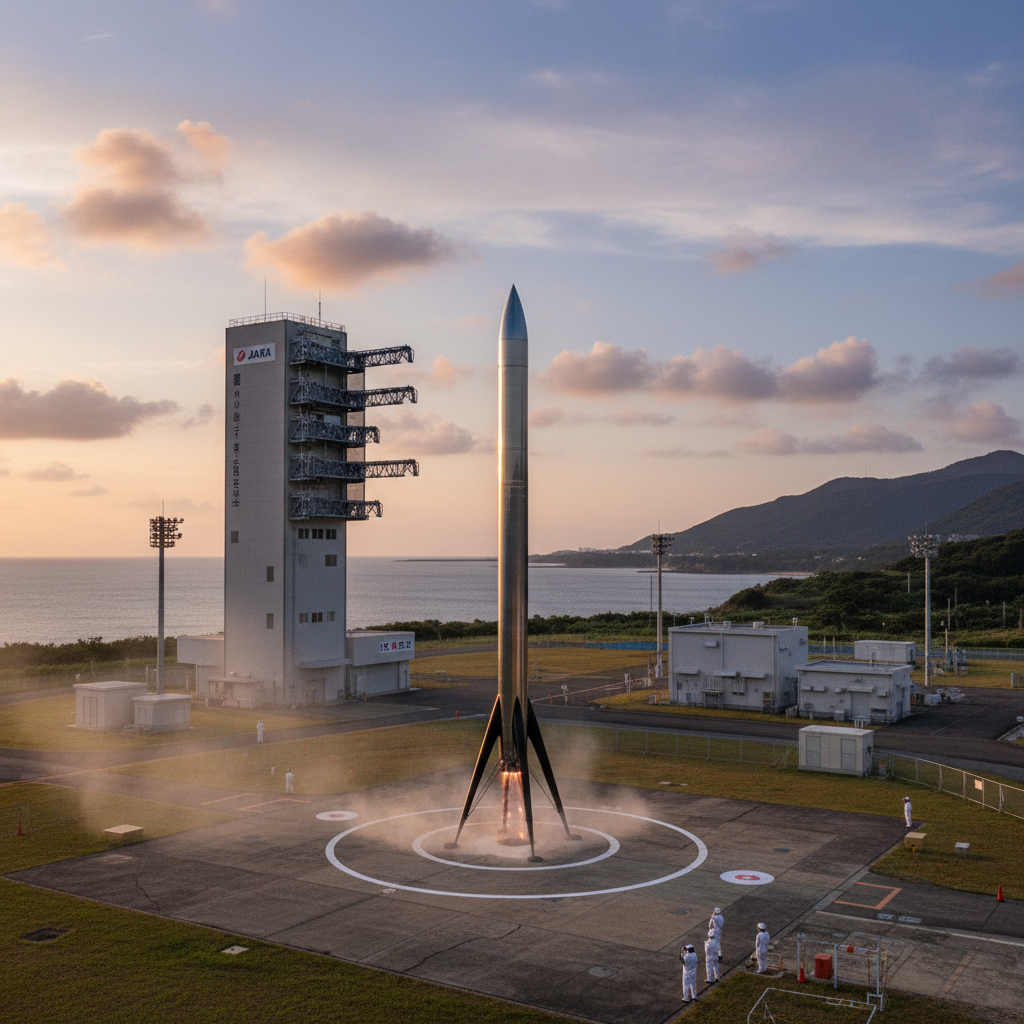
It wasn’t done at some remote launchpad overseas, either. The test happened at Honda’s own facility in Taiki Town, Japan, which is fast becoming a small but important space center. The company’s rocket flew for about 56.6 seconds, reaching a height of 890 feet before landing just 37 centimeters away from the landing pad.
A small mistake? No, that’s precision engineering.
The rocket used in the test is 21 feet tall and weighs about 2,800 pounds when launched. Its launch vehicle includes foldable landing legs, which allow the rocket to deploy and land in a controlled manner. After the rocket reached its maximum altitude, the vehicle landed back down on the platform, right where it was supposed to be.
Now, that’s not the kind of thing one expects from a company that’s best known for transporting people on roads. Still, the results show that Honda isn’t experimenting with some wild idea. Instead, it’s building actual hardware that could be used in spaceflight.
Not to the moon and back
Honda isn’t going to space unprepared. The company first announced plans to work on space technologies late last year, but it hasn’t really revealed much about its work since then. Now, after years of quietly developing the tech, the company is finally showing the world what’s going on behind the scenes.
Rather than building an entirely new business ecosystem, Honda is reusing technologies it already has. That includes its automotive systems for autonomous driving, which help control the launch vehicle’s position and landing. The same kind of control used to navigate a car without any human intervention is now used to stabilize and precisely land a rocket.
The proof of concept works, too. Instead of starting from scratch, Honda has been using the technology and experience it’s developed in other industries to work toward new opportunities. Rather than building an entirely new business from the ground up, Honda is simply adapting technologies it already has and translating them into new opportunities.
This is not just some silly attempt to look cool. Honda wants to use satellites and space infrastructure in the future. Whether it’s data transfer, navigation, or communications, having more access to the upper atmosphere is becoming increasingly important.
Although the rocket is still in the basic research stage, the success of this test is promising. The results hint at what’s to come in the future. Honda sees potential in creating its own small launch vehicles for space, which can then support an increasing number of satellite launches. That, in turn, could tie into Honda’s automotive, robotics, and communications businesses.
Honda has its sights set on reaching suborbital space by 2029. That means flying beyond 62 miles (100 kilometers) above sea level, which is the height most people recognize as the boundary of space. These are flights that don’t orbit around Earth, but they do break through Earth’s atmosphere — which itself is no small feat.
A successful suborbital flight would prove that Honda has the necessary propulsion, control, and recovery technologies to make more complex launches. To put satellites into orbit, however, it would need more than simply reaching space. That would require new rockets, guidance systems, and potentially even new payload technologies.
That next step remains unclear. Honda hasn’t decided to build a commercial rocket business yet. Still, this test flight shows that it’s well on its way to making that choice. The launch pad itself is located in Taiki Town, which has become an emerging center for aerospace development. Located in Hokkaido, it’s partnered with other private companies and agencies like JAXA to build testing facilities, support systems, and even training programs.
With Honda joining the growing list of companies testing real-world prototypes, Taiki Town is quickly becoming one of Japan’s most important centers for space development.
There’s still a long way to go. Honda is just entering a field led by big names like SpaceX and Blue Origin, which have far more resources and experience in orbital flight. Still, what Honda brings to the table is different. It’s a background in manufacturing efficiency, robotics, and mobility technology that can be a competitive advantage as it moves forward.
This week’s test was not a one-time experiment. It was a sign that Honda is ready to go far beyond the Earth’s surface.
The rocket itself landed just a few feet from the target. Still, the company is taking its first steps toward a journey that’s headed a whole lot higher.