- calendar_today August 31, 2025
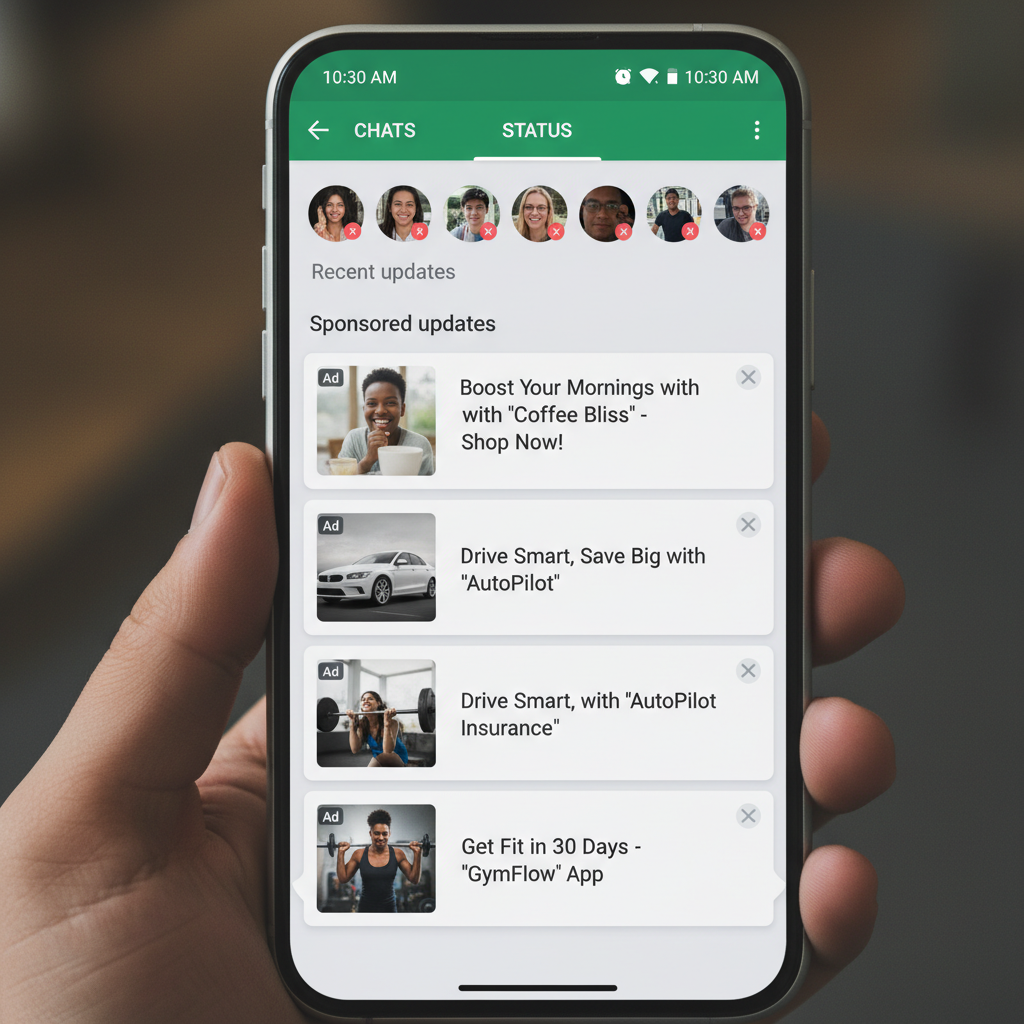
For the first time since it launched in 2009, the omnipresent messaging app WhatsApp is now serving up ads. The change will have a major impact on one corner of the app — the part where users share status updates and track so-called Channels that curate specific content for users. Unlike some of its social network cousins, WhatsApp isn’t just trying to get your wallet out; the company’s ad placement will appear in a specific area of the app. That’s because Meta — WhatsApp’s parent company — doesn’t want to “interrupt” chats between friends and family.
So, for now, ads will quietly sit in the “Updates” tab, the place where people put up status updates or follow channels on topics or interests. The new change will be rolled out gradually to users, and over time, ads will become available to more people. But, you’re likely not seeing any right now if you use WhatsApp primarily for chatting.
Meta claims that 1.5 billion people around the world access the Updates tab every day, making it a massive potential audience for advertisers. If you’re one of the people who regularly visits the Updates section, however, the landscape might be a little different.
WhatsApp is introducing three different types of ads. First, there are sponsored posts that appear in the Status section, where users see picture, video, or text updates from friends that vanish after 24 hours. They might soon also find sponsored content from companies in their feed. These posts look just like normal statuses, but they’re from brands. Users can tap on the ads to start a conversation directly with the brand.
Second, WhatsApp is adding Promoted Channels. This means that channel administrators can pay for more reach so their content is seen by more users. For businesses and creators, it’s a way to grow their following directly within WhatsApp, something that’s been hard to do in the past.
Finally, Meta is testing a subscription-based model for Channels. Businesses can charge users a monthly fee in exchange for exclusive content. So, for example, a user could pay to follow a cooking channel that sends out subscriber-only recipes and updates. It’s a new source of revenue for WhatsApp and a new monetization option for businesses and influencers.
What about privacy? This is the first thing most users will be wondering. After all, WhatsApp built its name on being a private, secure messaging service. Meta says it’s taking a cautious approach. Ad targeting will be based on general information — like your country code, device language, age range, and city — and not your exact location or personal information. The company also says it will use behavior in Channels and Status updates to determine which ads to show you. For example, what type of content users follow, how they interact with posts, and which ads they click on.
Importantly, WhatsApp says that end-to-end encryption will still protect personal messages. The company says it won’t be reading your messages or using them to serve ads. And if you’re using other Meta services like Instagram or Facebook, there’s an optional feature called Accounts Center. If you link your WhatsApp account to this, Meta can use data from across its platforms to serve you more personalized ads. This feature is turned off by default and can be switched off at any time.
WhatsApp will also introduce new transparency tools for users to understand and control their ad experience. You’ll be able to see why a specific ad was shown, block certain advertisers, or report any ad you feel is inappropriate. The company says it’s working to make the whole experience as user-friendly — and as optional — as possible.
All of this comes as part of Meta’s larger plan. WhatsApp — which has over 2 billion users worldwide — hasn’t contributed as much to Meta’s massive advertising business as it could. Most of WhatsApp’s current revenue comes from its Business Platform, which is a paid service for businesses to communicate with customers, and from “click-to-WhatsApp” ads on Facebook and Instagram. But that’s changing. Meta CEO Mark Zuckerberg said the Business Platform is becoming a growing revenue stream. Now, by adding ads directly into WhatsApp, Meta is expanding its presence further.
“We didn’t feel that WhatsApp needed to be pushed,” WhatsApp VP of Product Alice Newton Rex said. “It felt like the next natural evolution.” Businesses have been asking for more ways to reach users directly within the app — and this new ad system is Meta’s answer. With other social platforms like Reddit and Discord also moving toward ad models, it’s clear the trend is underway. Social platforms — even those built on privacy-first promises — are looking for ways to insert ads without alienating their users.
Meta paid $16 billion for WhatsApp in 2014. For years, the app was untouched by Meta’s ad machine. But with advertising business more important than ever — Meta earns about 98 percent of its revenue from ads — WhatsApp was always destined to be next. This is the start of a new era for the platform.
For most users, the change might go unnoticed — especially if they don’t visit the Updates tab. But for WhatsApp and Meta, it’s a significant shift. One that reflects the economic pressures facing the company and the pressure to grow from investors.
Ads on WhatsApp aren’t just theoretical — they’re real and here. The experience has been mostly untouched so far. But with Meta at the wheel, this could just be the beginning of WhatsApp’s transformation into a full-blown commercial platform.