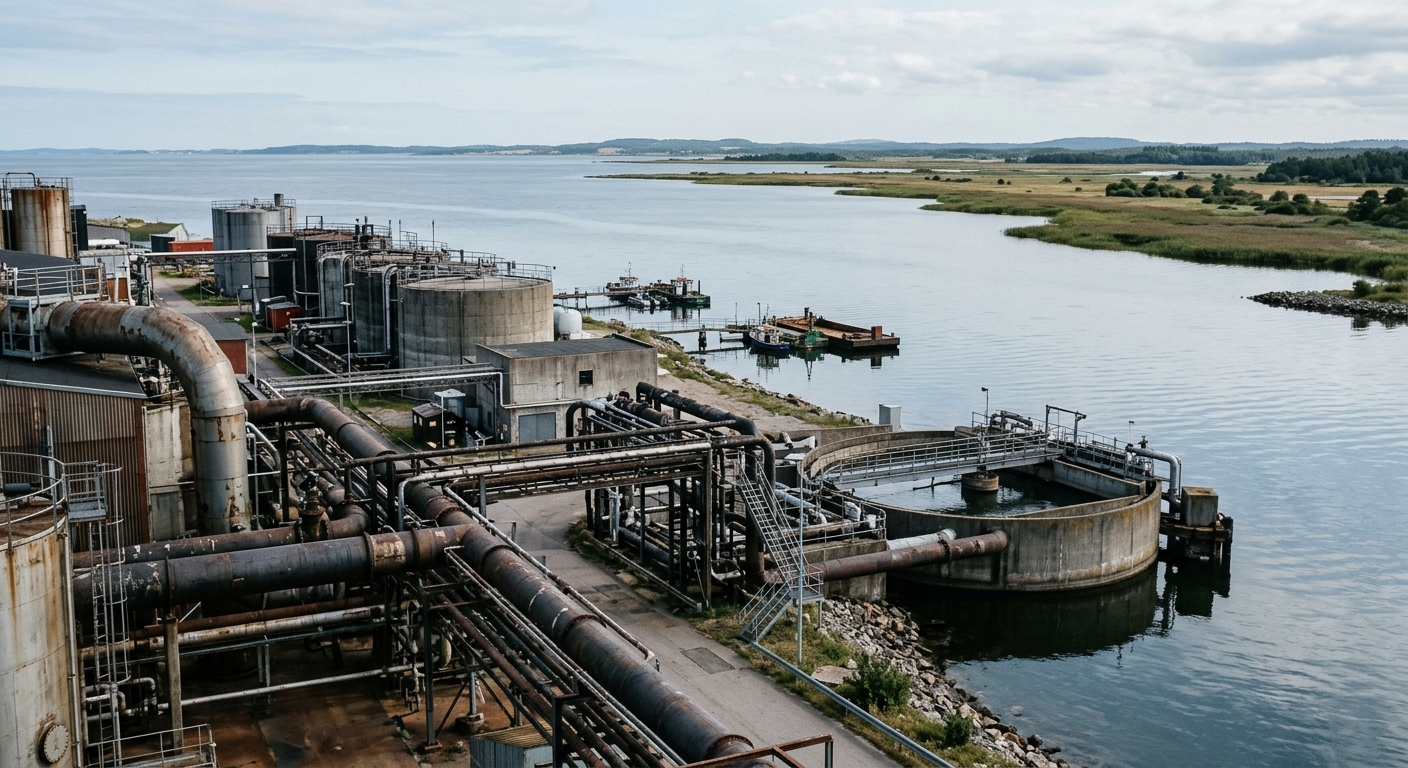
AI-generated illustration; not a photograph of the reported event.
- calendar_today October 28, 2026
Overview of the Harbor Island Desalination Project
Plans are advancing for the development of the Harbor Island seawater desalination project on the Gulf Coast of Texas—an initiative that, if realized, would be the largest desalination plant in the Western Hemisphere. Set on Corpus Christi Bay, the project marks a dramatic shift in how water may be supplied in Texas: unlike previous public infrastructure, this massive development would be both privately owned and operated by IDE Technologies, an Israeli water treatment company.
IDE Technologies and Texas: A New Partnership
IDE Technologies, known globally for its work in seawater desalination, was selected as the developer by the Nueces River Authority (NRA), a small state water agency, this summer. Mark Ellison, IDE’s regional sales director, highlighted the Harbor Island project as the company’s global priority, underlining its scale and significance. The proposed plant could ultimately provide up to 100 million gallons of freshwater per day, requiring an extensive infrastructure network of sub-sea tunnels, pipelines, and pump stations stretching more than 200 miles inland.
Financing and Costs: Impact on Consumers
The combined estimated cost for IDE’s plant and the supporting water infrastructure is $6.4 billion. IDE plans to privately finance and build the plant, while the NRA is tasked with developing the vast conveyance system. This model represents a shift from public to private water ownership in Texas—a move that has stirred debate among city officials, industry leaders, and water policy experts.
Private financing typically comes at a higher cost than public municipal bonds, and those costs are expected to fall on consumers. Desalinated seawater is already the most expensive option for municipal water supply. Mary Grant, water policy director at Food and Water Watch, warns that privatization may exacerbate the existing affordability crisis in water supply as private developers seek profits rather than just cost recovery.
Regional Water Scarcity and Industry Demand
Texas’s rapid population growth and recurring droughts have stretched existing water supplies. Despite years of ambitions and advocacy for desalination, Texas has yet to see a publicly owned seawater desalination facility come to fruition. Corpus Christi, which has tried for over a decade to launch its own municipal plant, now considers purchasing desalinated water from private suppliers, including the CC Polymers plant and IDE’s Harbor Island facility.
Industrial customers, including major refineries and chemical plants, are also seeking reliable sources of water to safeguard against drought-related shortages. Some city council members, such as Roland Barrera of Corpus Christi, express reservations about long-term purchase contracts that could lock the city into expensive agreements.
Infrastructure, Ownership, and Political Dynamics
The Harbor Island project stands alongside several other private and industrial desalination initiatives in Texas, including planned facilities near Brownsville and Houston. However, it represents an especially ambitious step, given the scale of its planned infrastructure and private ownership model. This approach contrasts with Texas’s historical practice of public water supply ownership and accentuates ongoing debates about how best to manage water scarcity in the state.
Political involvement has shaped the project’s trajectory. The NRA, after taking over responsibility for Harbor Island in 2024, secured millions in reservation fees and a $7 million state grant to develop the pipeline system. Yet questions remain about full project financing and the ultimate cost of water for communities and industries along the planned conveyance network.
The Future of Texas Water Supply
As of September 2026, IDE Technologies and the Nueces River Authority continue to develop the Harbor Island project, with final water rates to be determined. Decisions by the Corpus Christi City Council and other prospective customers will be critical for financing and moving the project forward. Proponents frame desalinated water as an essential “insurance policy” against future water scarcity in Texas, while critics caution about the risks and costs of transferring public water supply to private ownership.
Source: texasobserver.org.